eczema and skin health self-management (AI exploration)
How might we leverage AI to help people with eczema understand, predict, and manage their skin health?
CONTEXT
These lifelong conditions often cause considerable discomfort, with rashes leading, in some cases, to skin infection, joint pain and sleep disturbance. In fact, skin, brain, and gut health are highly interrelated. Studies reveal that stress can trigger neuroinflammatory responses in the skin, contributing to atopic dermatitis, which is associated with IBS, anxiety, and depression.
Managing these complex variables can be a heavy mental burden in daily life, impacting self-esteem and increasing anxiety and depression.
PROPOSAL
This holistic platform combines skin-imaging analysis to identify and differentiate chronic skin conditions, a lifestyle-tracking system that enables people with sensitive skin to manage their symptoms over time, while alleviating mental load and empowering them with a sense of control.
Identifying AI opportunities relevant to customers and the business.
Globally, 20% of children and 10% of adults live with chronic skin conditions such as eczema, which can be challenging to identify and difficult to manage as they can change over time and vary by person. Common triggers include diet, cosmetic products, household chemicals, and stress.
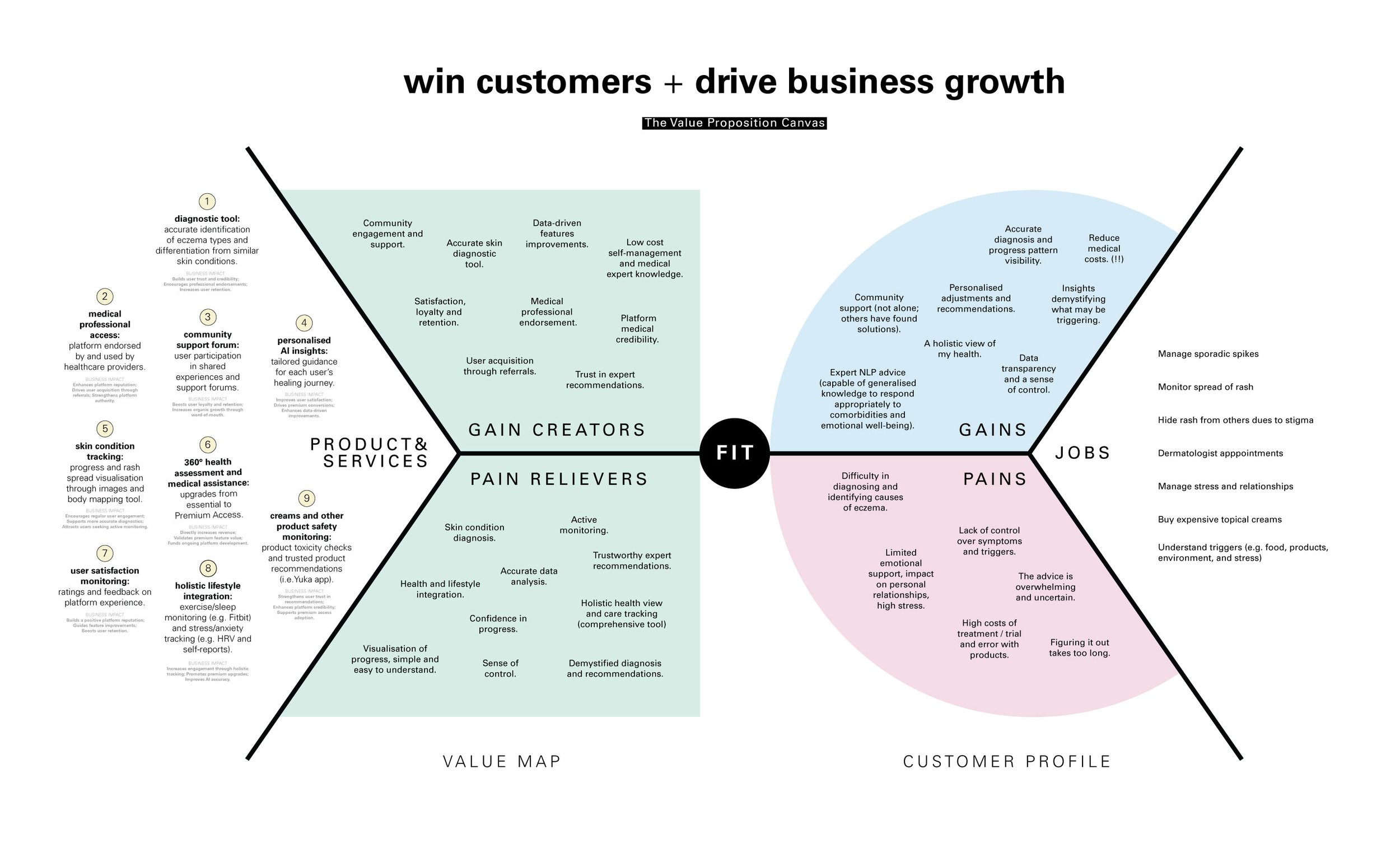
Customer profile:
Set of customer characteristics from observations, assumptions and market insights.
Value map:
The benefits customers can expect from the product or service.
The AI design process.
The AI design process mirrors the double diamond design thinking process but emphasises technical feasibility and business viability in designing ad building products and services.
It ignores the full scope of team efforts in creating a digital product, including rigorous, essential user-centred creative and strategic work.
The AI design process has 4 phases:
(1) AI intelligence
(2) Business process
(3) AI technology
(4) Tinkering
(1) AI intelligence
(2) Business process
Strategic and operational implications.
The AI includes everything you need to address eczema concerns. It's the go-to place for sufferers to diagnose, document, and track symptoms, and calculate triggers with a holistic lens.
Integrating existing metrics from tools people already love and use (e.g., Fitbit, Zoe, Headspace), the AI can analyse skin image progress alongside other shifting factors, such as sleep quality, stress levels, and environmental triggers.
The AI provides a holistic view that can help users adjust metrics and observe symptom changes. It also leverages the medical community and patient Superminds to engage and attract more accurate, high-quality, certified, and trustworthy content diagnoses, predictions, and recommendations.
(3) AI technology
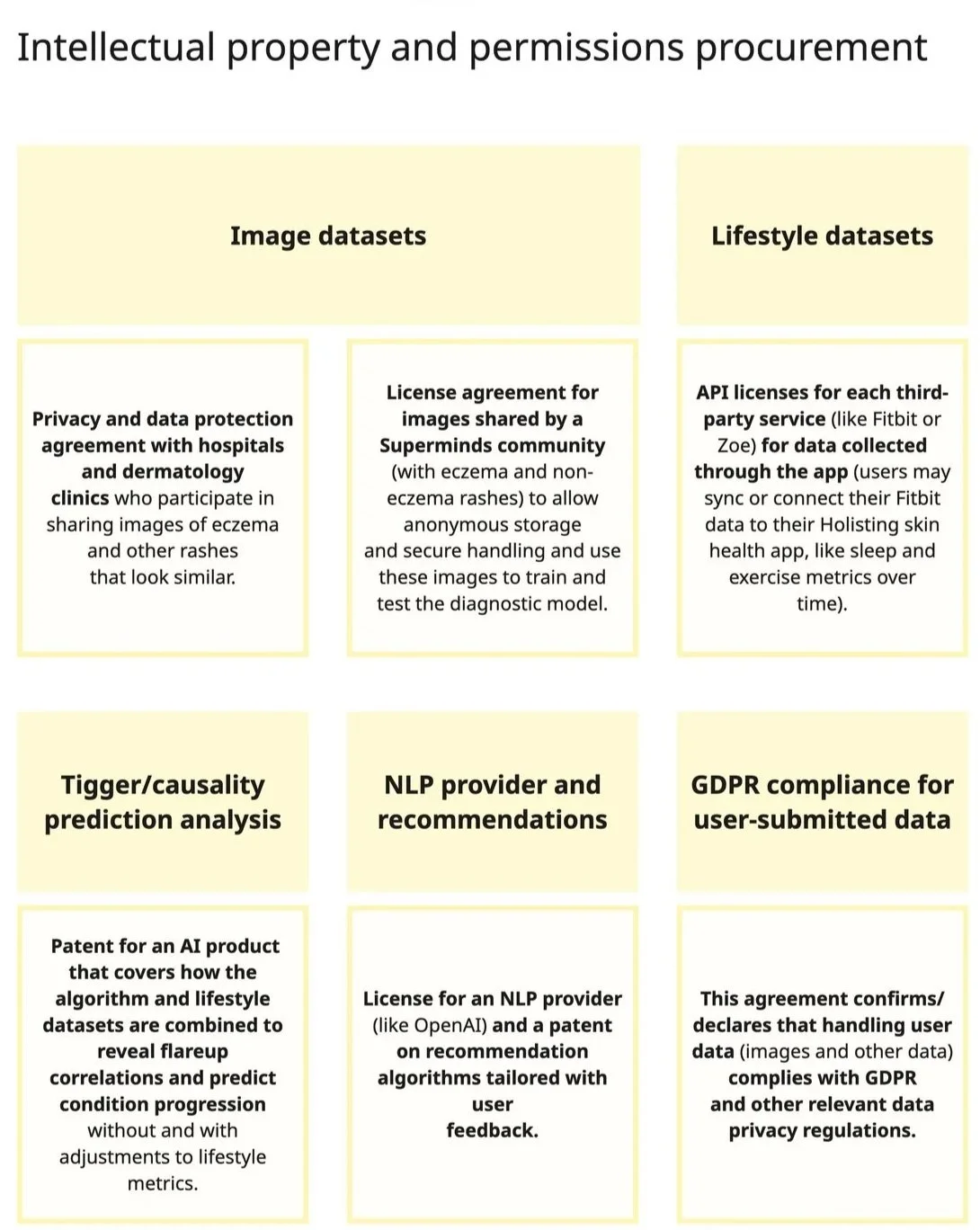
Economics of scale (EOS): the more users join the platform, the more valuable and accurate it will be.
This can be mitigated by increasing the number of samples and by engaging medical professionals/specialised eczema and holistic medicine organisations worldwide to contribute images and “correlated metrics,” thereby simulating a large community and enabling the collection of larger training datasets to accelerate the model's growth and intelligence.
(4) Tinkering:
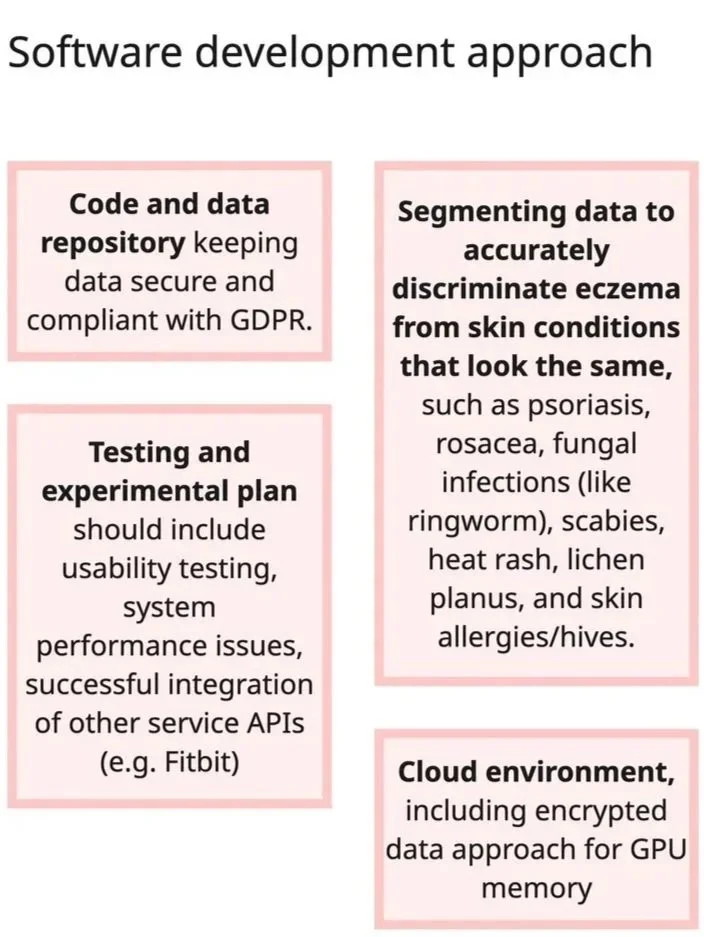
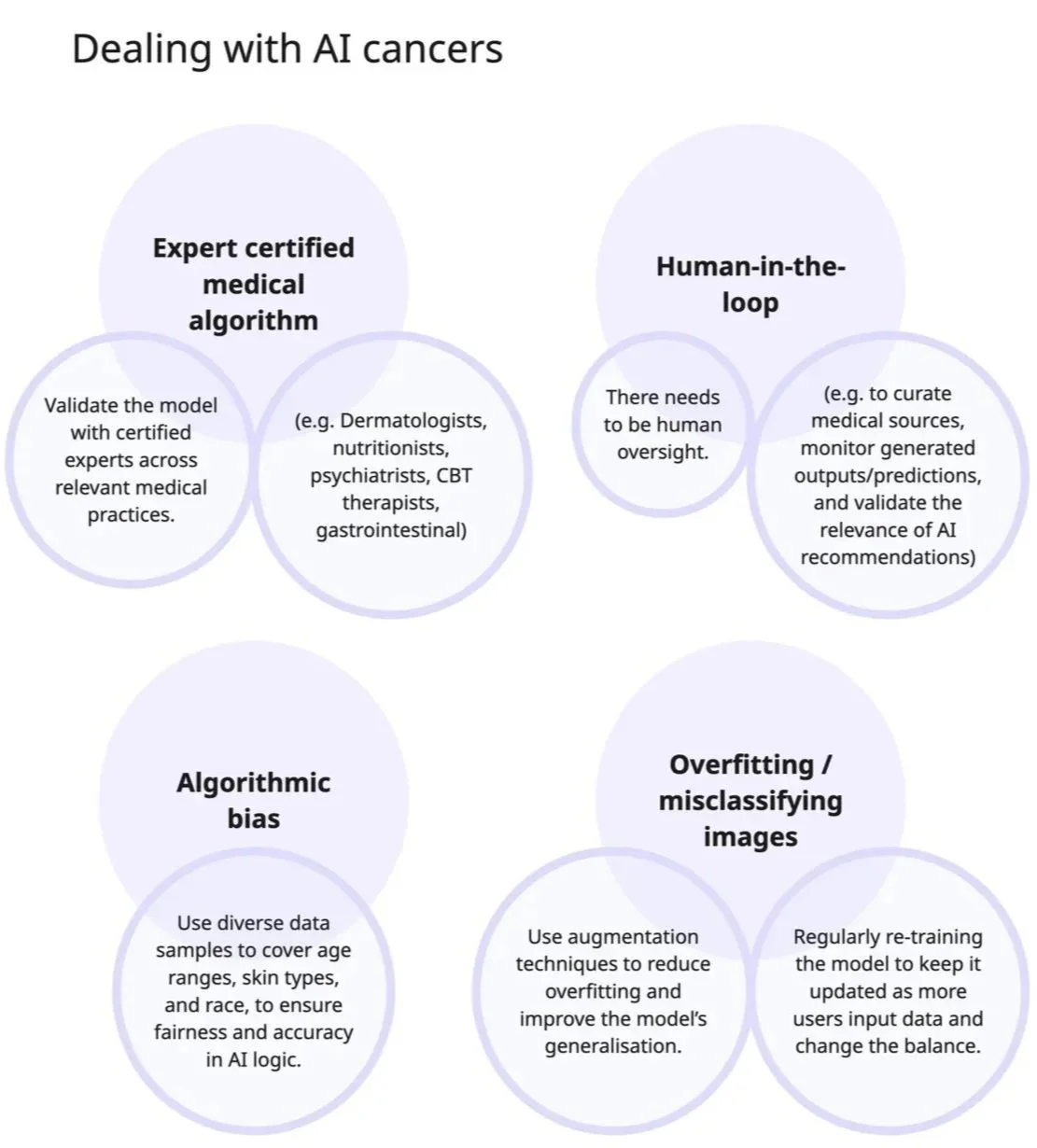
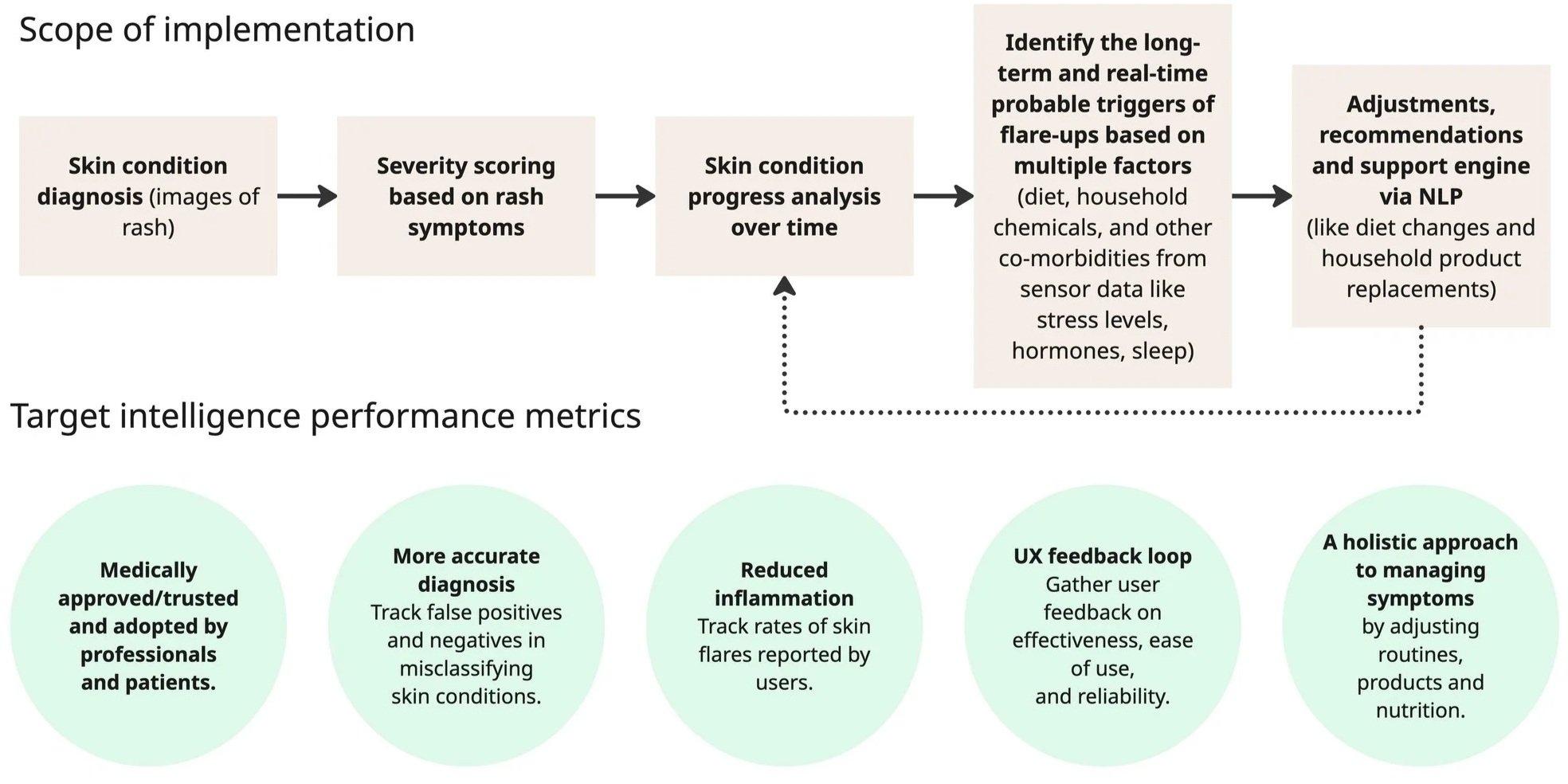
(1) AI intelligence.
The vision: transparent, empathetic, and data-driven care.
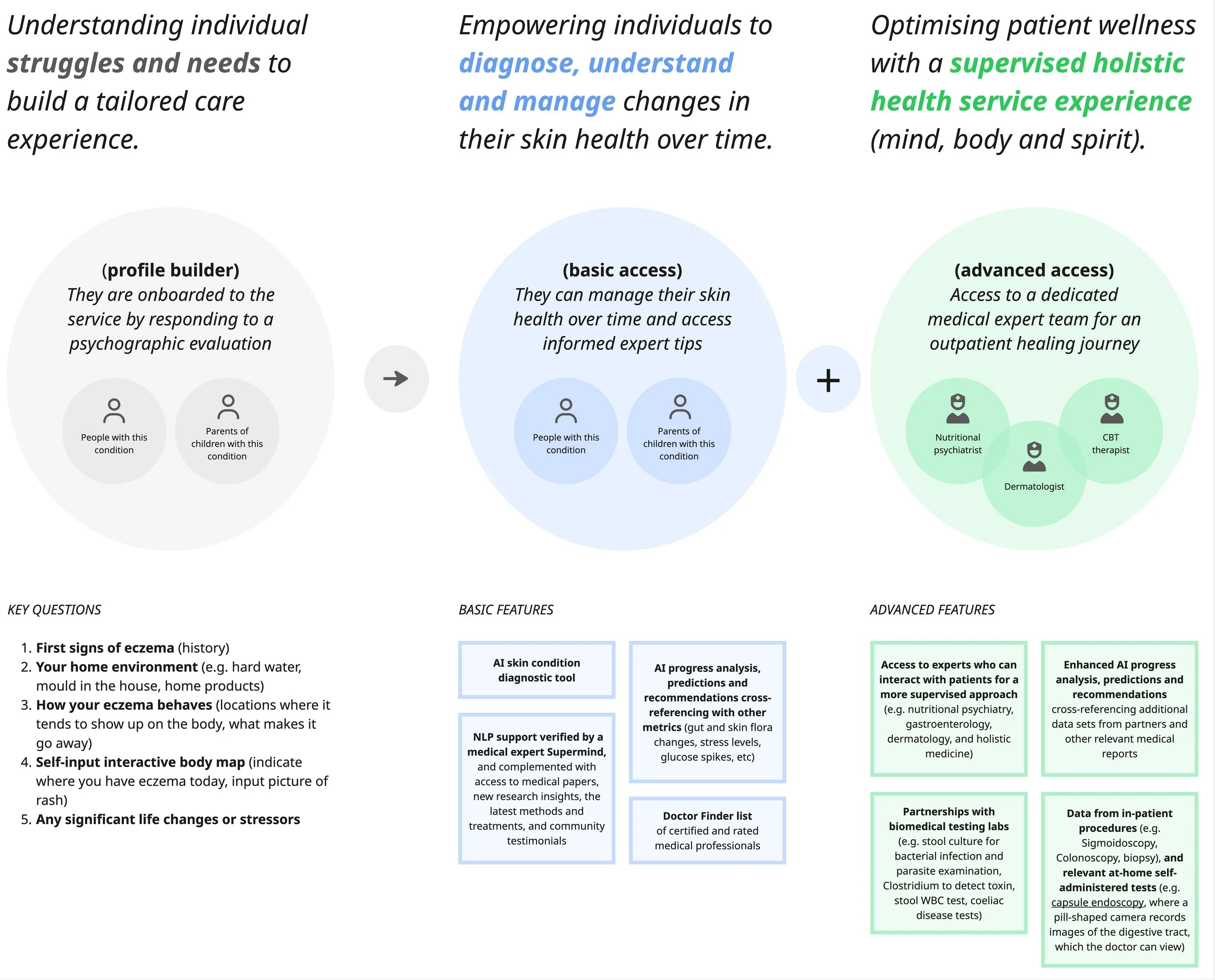
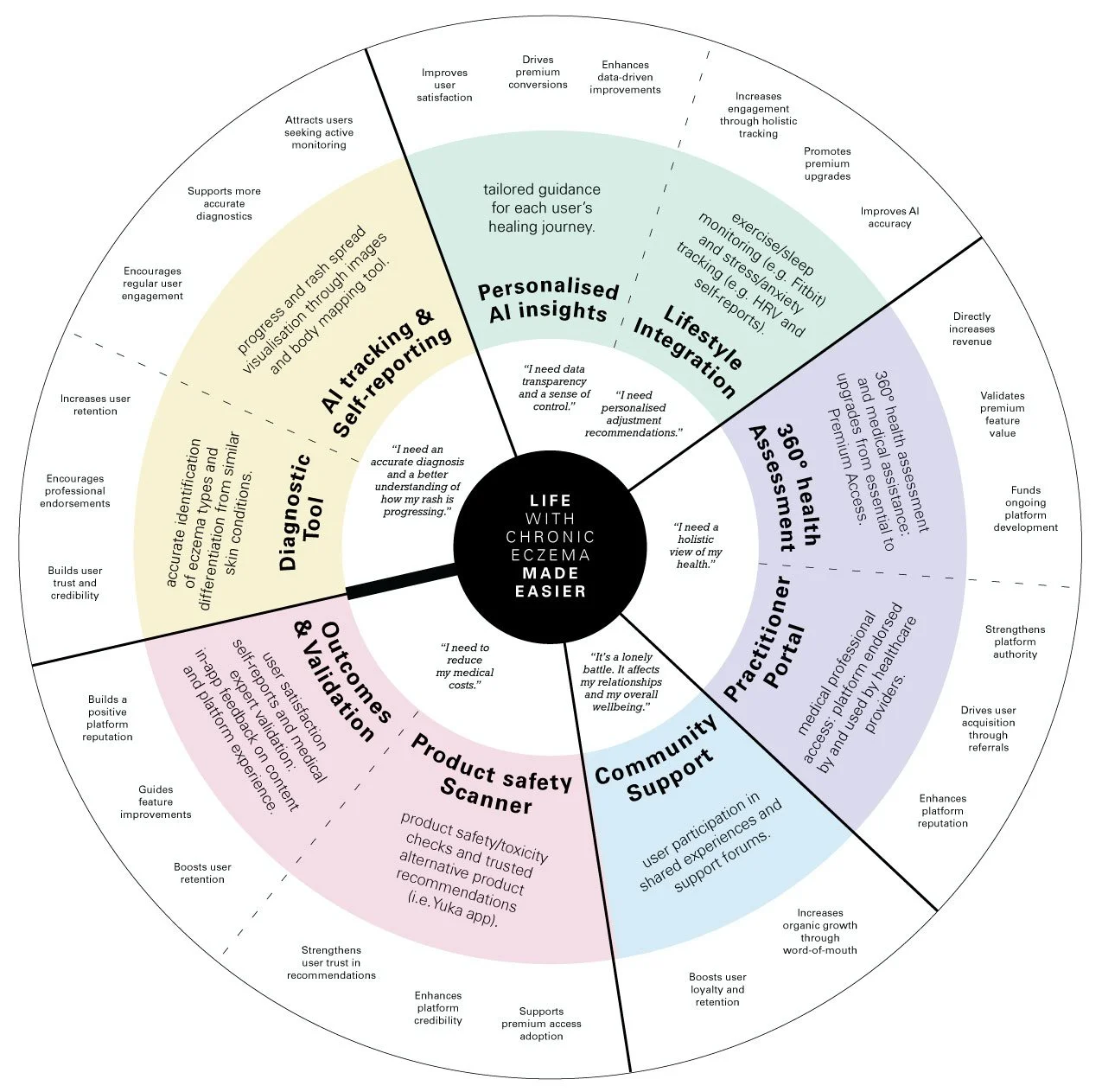
(2) Business process.
The pilot (scope)
“I can manage my eczema by monitoring how my symptoms are progressing, gathering data to understand shifts in my rashes over time, and making informed adjustments.”
MVP FEATURES
• AI skin condition diagnostic tool
• AI progress analysis, predictions and recommendations cross-referencing with sleep quality, exercise, and glucose spikes (Fitbit and Zoe data integration)
• Helpful resources by topic (e.g. diet adjustments, why sleeping matters for my skin, understanding glucose spikes, how exercise relates to my skin, eczema-safe products, do I have mould in the house?, managing stress, etc.)
Primary audience
• People with this condition
• Parents of children with this condition
Human oversight
• Dermatologist
• Nutritional psychiatrist
• CBT therapist
(3) AI technology: low-risk and high-value solutions.
Bring the pilot as close as possible to production to demonstrate high business value.
(Solution 1) leveraging existing CNN models
from medical datasets for image classification and diagnosis (e.g. Inception V3 pre-trained, which can help accelerate the accuracy of learning on eczema diagnosis) and fine-tuning the model on an eczema-specific dataset (https://arxiv.org/pdf/2110.06512)
(Solution 2) LSTM for progress tracking (time-series analysis)
for image processing and tracking the severity score over time and identifying patterns over time (time-series analysis)
for analysing sleep, exercise, and other time-series health data and providing related recommendations
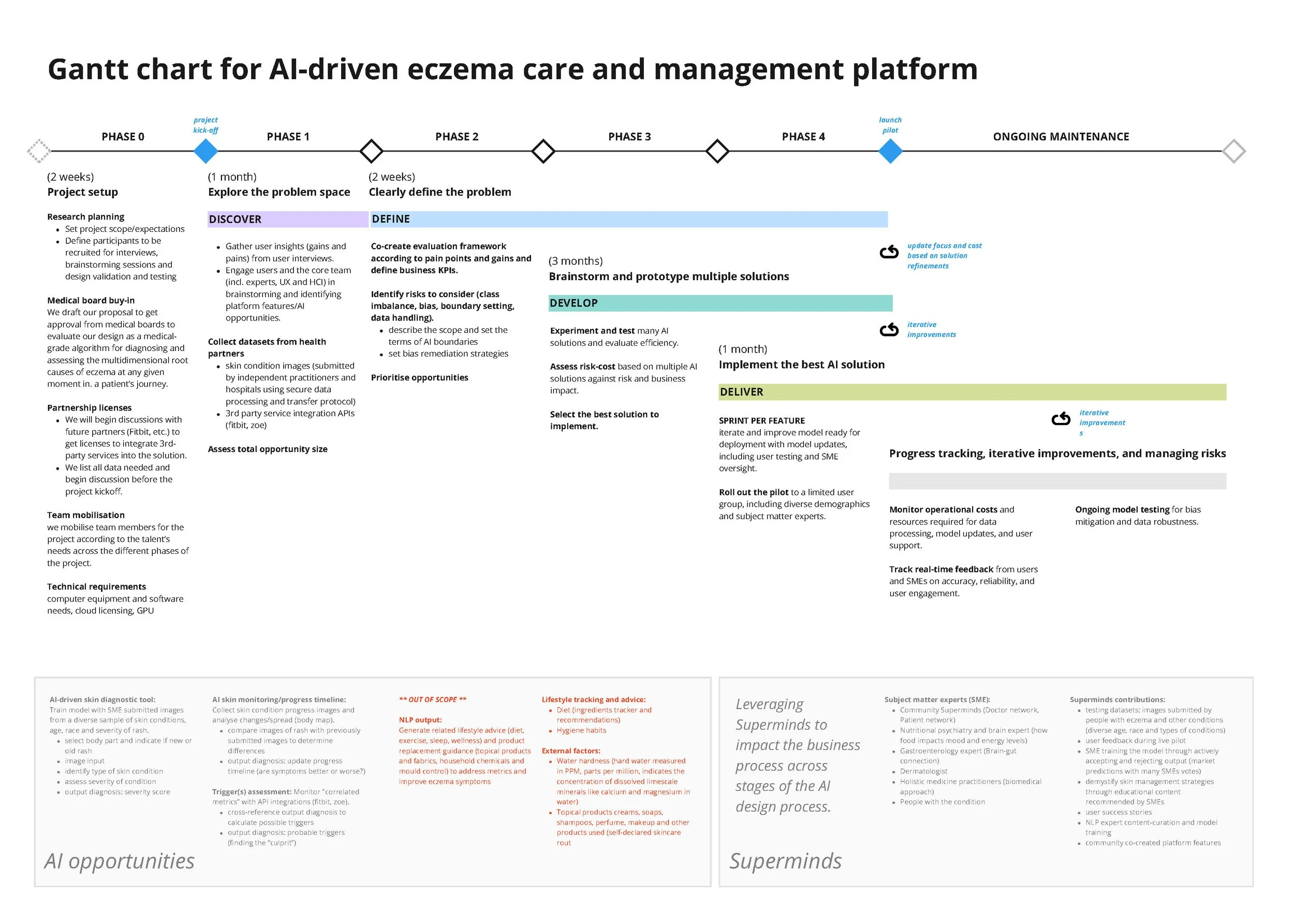
The action plan.
Roadmap to evaluate the pilot as it is being deployed.
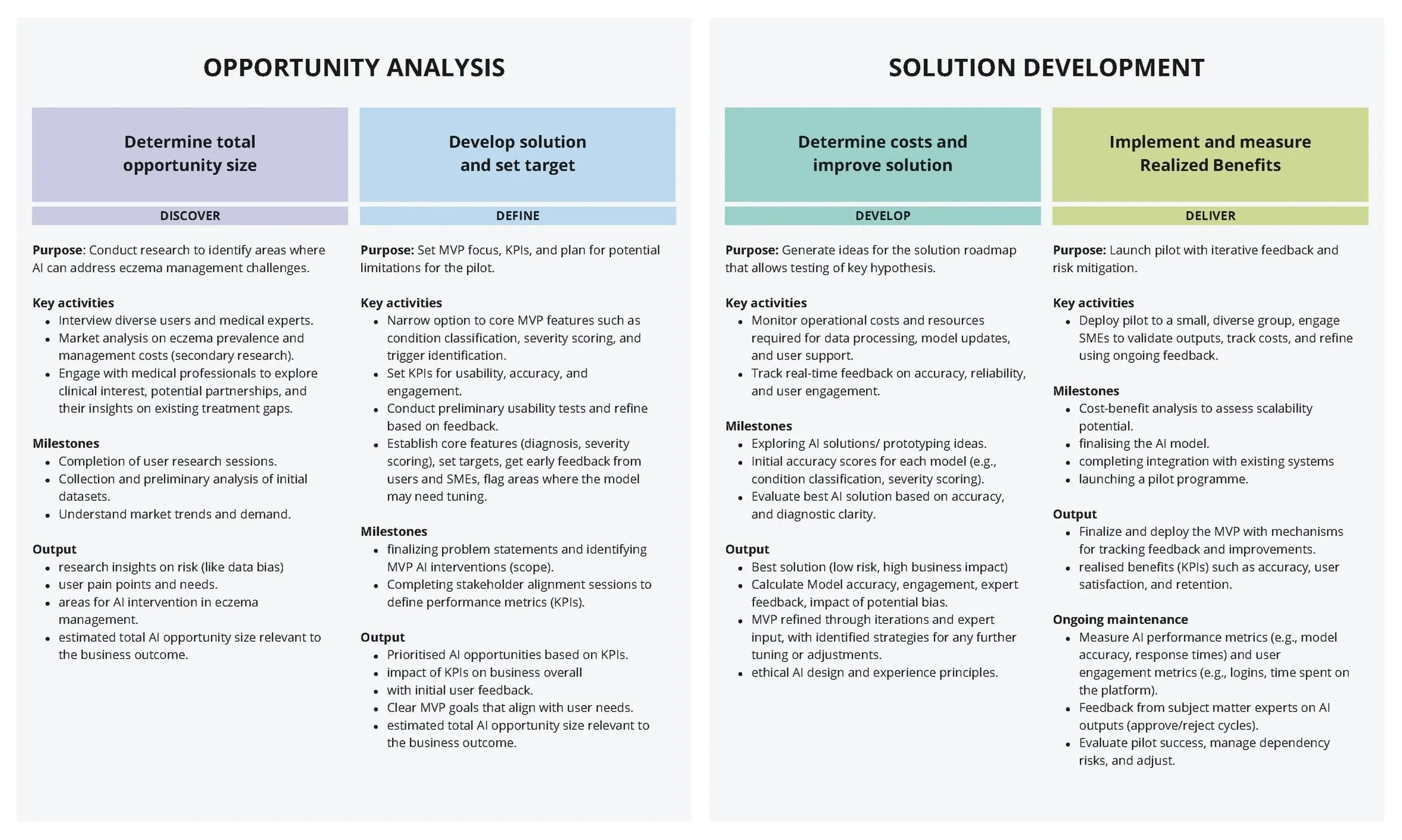
Workflow proposal.
AI-related activities plan over the next six months.