
neighbourly café: trust in public space (systems design intervention)
A small system of signals that helps occasional visitors to a neighbourhood café feel safe stepping away from their laptop.
Laptop workers who visit a café only occasionally pack everything up for a two-minute break, while regulars leave their things with the people around them. The difference isn't the café's security. It's whether you feel you're among people who look out for you, and newcomers have no way to tell.
How might we move from a coffee shop system where stepping away from your things feels risky, to one where even occasional visitors can quickly sense they're among people who look out for each other?
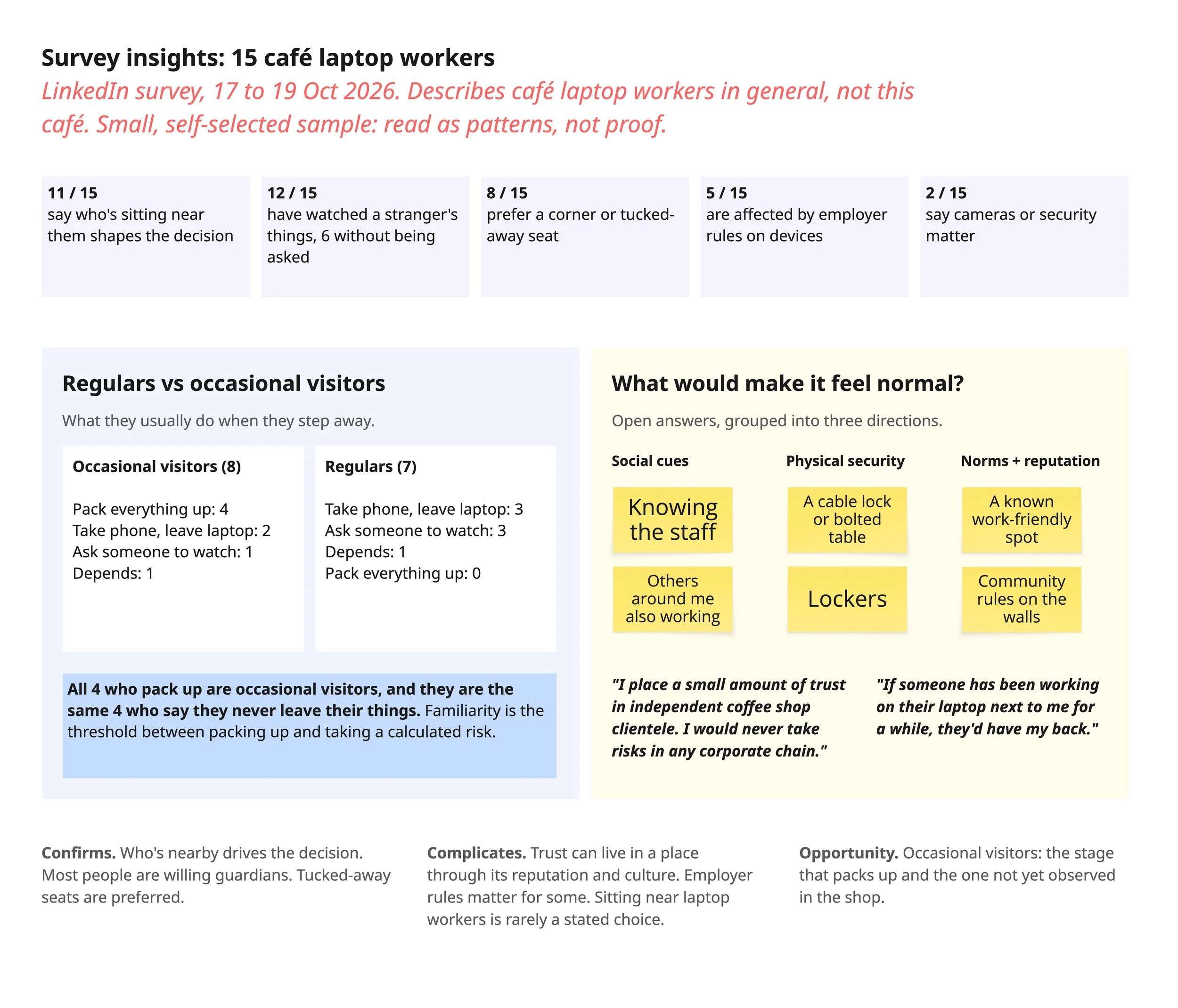
Trust in the café lives in the people nearby, not in the place.
I spent three hours observing a neighbourhood café, interviewed a regular, and surveyed 15 café laptop workers. The interview notes quickly overturned my first assumption: people don't trust the place, they trust whoever is sitting nearby. 11 of 15 said the people around them decide whether they step away, and only 2 mentioned cameras. Most telling, 12 of 15 had already watched a stranger's things. The ones who packed up were all occasional visitors.
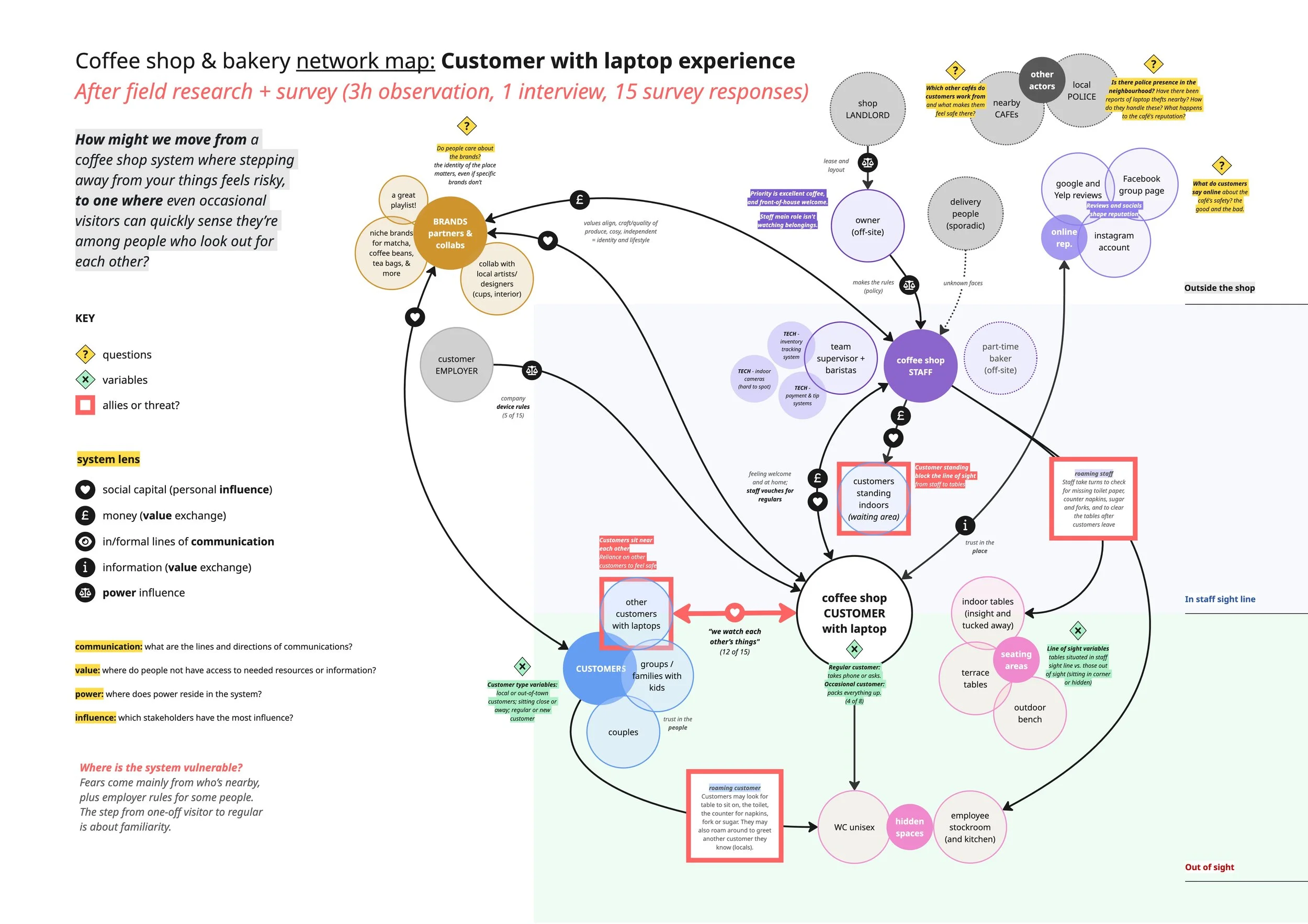
Mapping the network and the problem iceberg showed where the leverage was. A guardian norm already exists in the café, but newcomers can't see it. Staff vouch for regulars without guarding anyone's things, and the preferred tucked-away seats sit outside every line of sight. Rather than adding surveillance, the intervention makes an existing willingness visible.
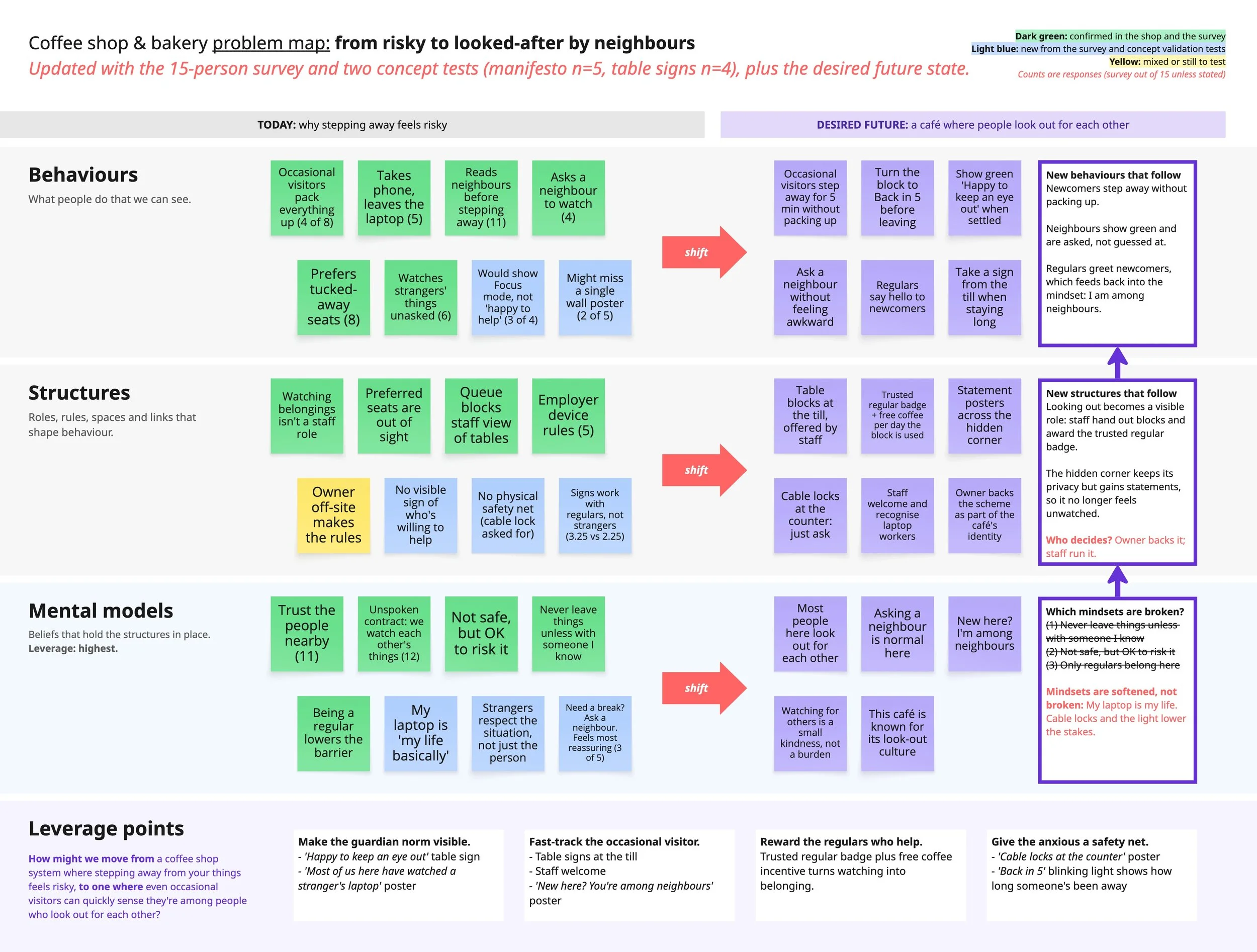
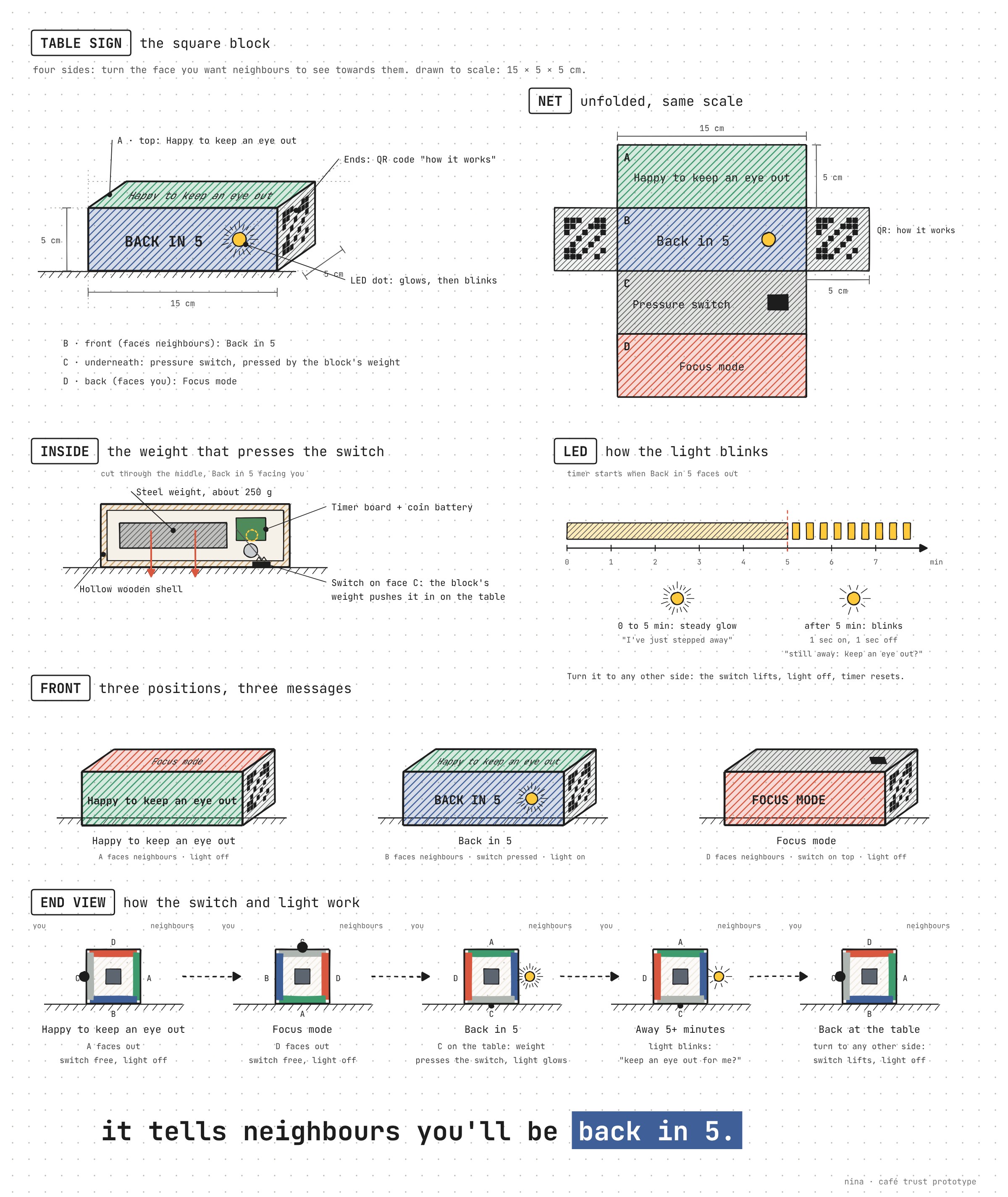
I propose low-tech signals.
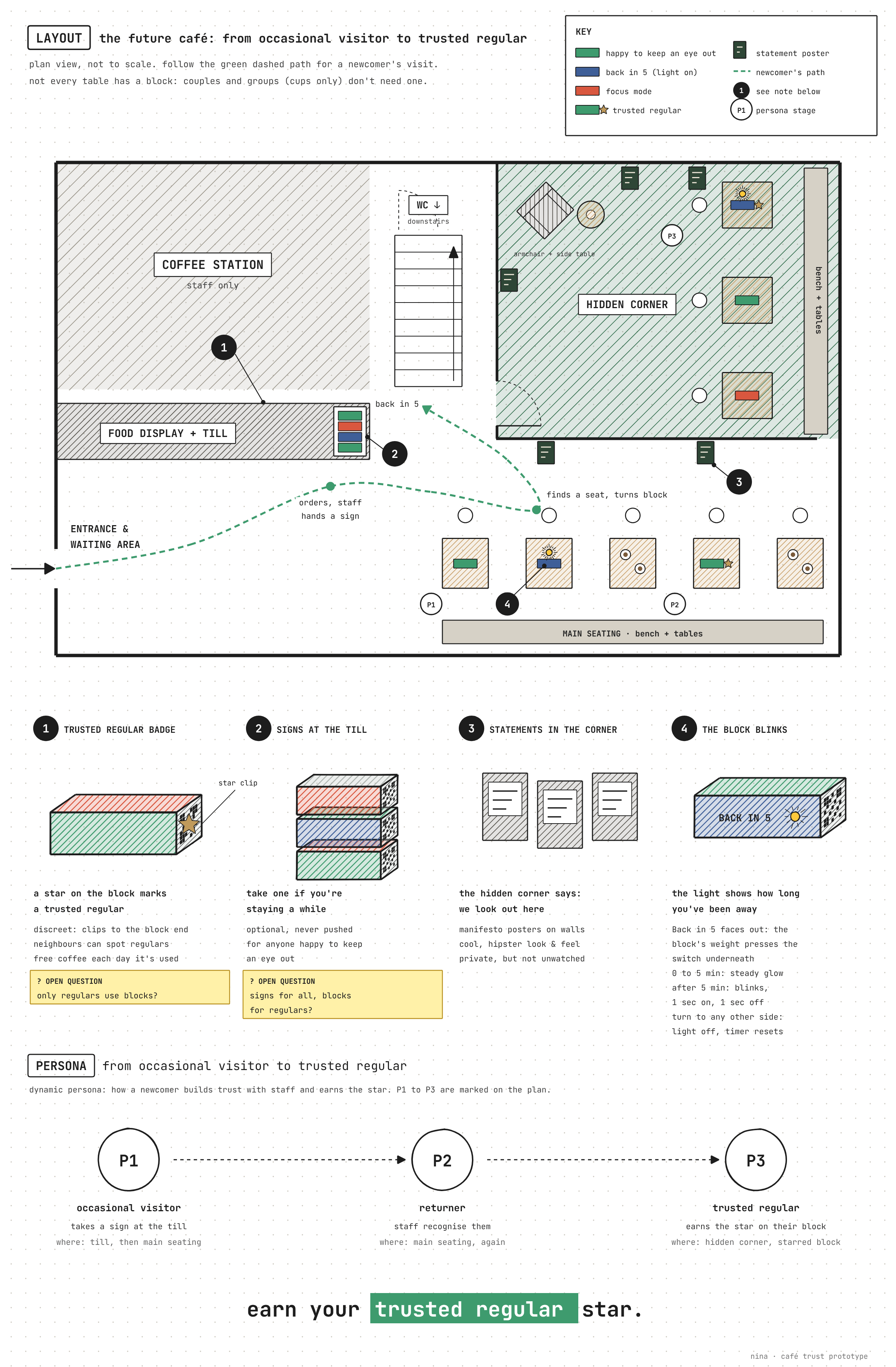
Table signs: A four-sided block sits on each table: green says you're happy to keep an eye out, red says focus mode, and blue lights up when you step away, blinking after five minutes so neighbours know. Trusted regulars carry a small star or badge on theirs.
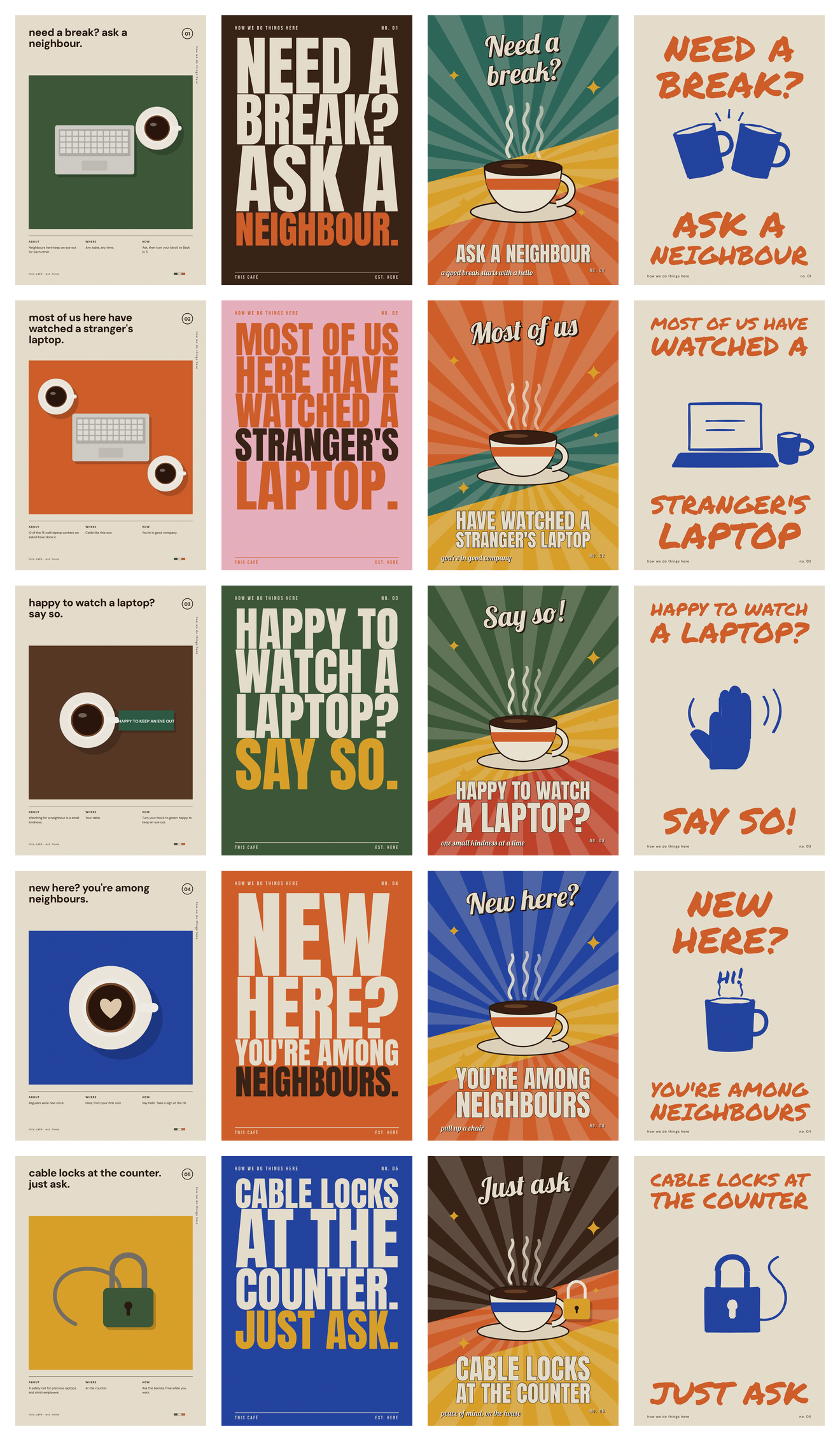
Manifesto posters: Statement posters, written from survey responses, put the norm into words: “Need a break? Ask a neighbour.”
Future café layout: A reworked layout guides a newcomer from the till, where staff hand out a sign, to a seat, and brings the hidden corner into the shared norm.
To close, I wrote a letter to myself from a year in the future:
“I'm writing from the hidden corner. Ten minutes ago I turned my block to blue and went downstairs. When I came back, my laptop was exactly where I'd left it, and the woman next to me just smiled. She's got my back. We've all got each other's back now.”
**Disclaimer: Drawings and posters developed in collaboration with Claude (AI) from my sketches, notes, research and reference images. Dimensions are placeholders.