
ARTICLES
Reflections on design practice + its impact on people, systems, and everyday life.
The Decentralized Mindset
Decentralized Computing emerges from the understanding of self-organizing systems in nature. This model, by its implicit plurality and distributed scope, makes use of the behavioral patterns and systemic structures of micro-world organisms to facilitate communication between objects (hardware) and non-objects (software). It allows individual devices to communicate as a unified whole. For Mitchel Resnick (1994) decentralization is crucial to redrafting our images of ourselves and the larger social and environmental system we live in.
Information Interaction Design (Nathan Shedroff)
In 1999, Nathan Shedroff asked: "How do we as designers create meaningful experiences and interactions for others?" (Shedroff; 1999:288). He introduced the importance of Information Interaction Design as the design of information for contextual user-centric interaction. According to Shedroff, emerging trends in information processing of designed products and experiences include: "information overload, information anxiety, media literacy, media immersion, and technological overload." (Shedroff; 1999:267) Those, in turn, define the focus of HCI and the practice of Information Interaction Design.
Designing for Perceptual Differentiation
The contextual scale of information matters; that is, to design at the human scale with considerations for accessibility, readability, and reachability, that correspond to user-centric demographic and psychographic requirements. To design for user-centric perceptual processing is to coherently integrate a belief system. Whitehouse explains how belief may contribute to the ways in which information is assimilated and interpreted, thus affecting the understanding of what one sees.
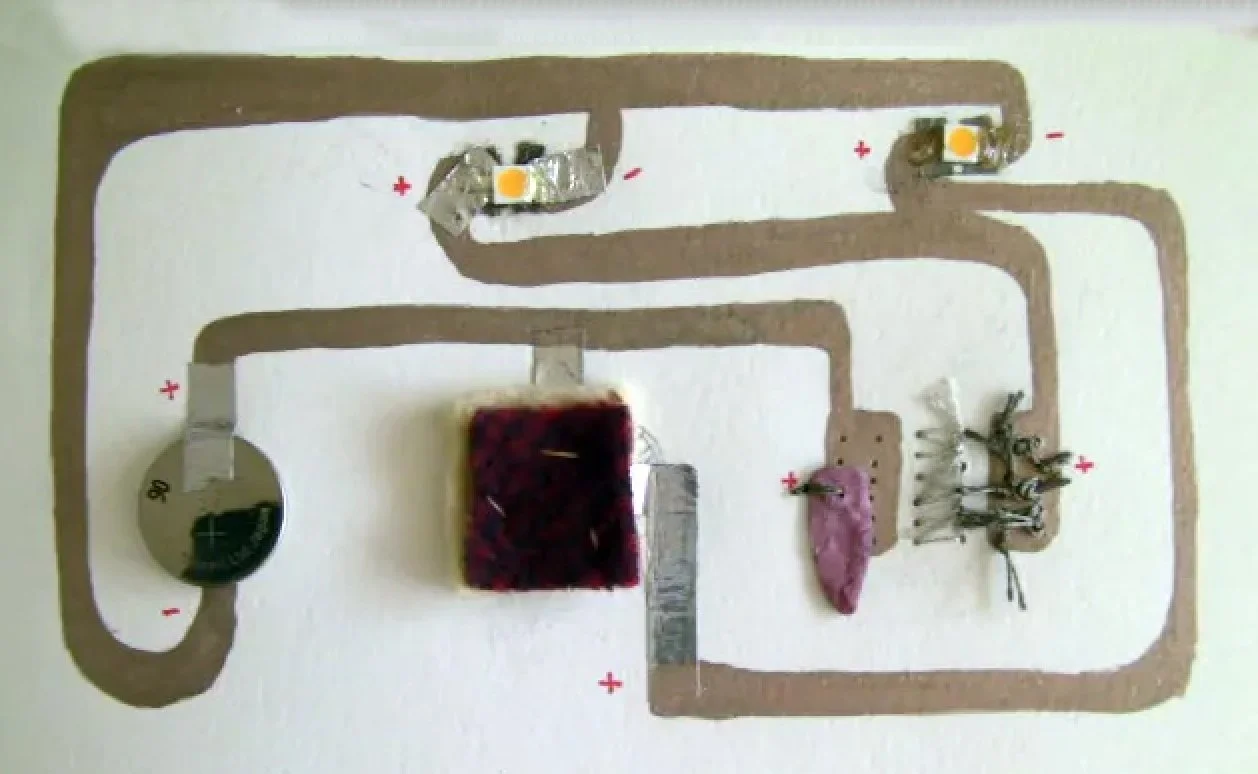
soft circuit - variable switches

soft Teddy
The Theories of Christopher Alexander
If we look at systems behavior and the similarities and particularities found within decentralized systems, we see how the conception of an environment built around rules or patterns might generate parallel effects wherein environments are created at the human scale and with the equal consideration of functional and experiential coherence, while yet remaining distinct and separate entities in their particularities.Alexander’s A Pattern Language promotes a bottom-up approach, which places users of buildings as builders of their environments through the process of co-creating a common ground with the collective consensus of a “shared pattern language”; to give users better control over the spaces they dwell in.
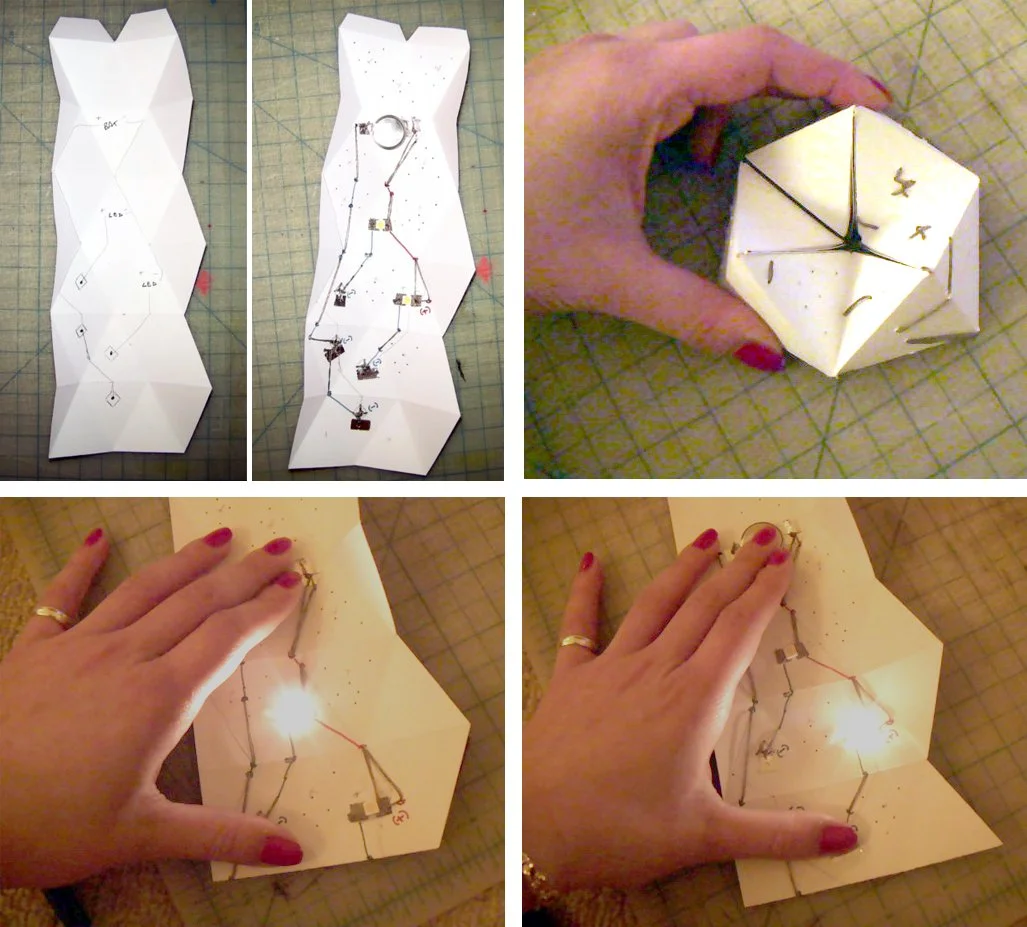
Kaleidocycle
Foundations of Information Design
Because information design is not a unified field and because its practice is highly context dependent, it has long been a challenge for designers and researchers alike to develop a vocabulary to describe and pass over the essential ingredients necessary for effectively communicating meaningful and persuasive information.
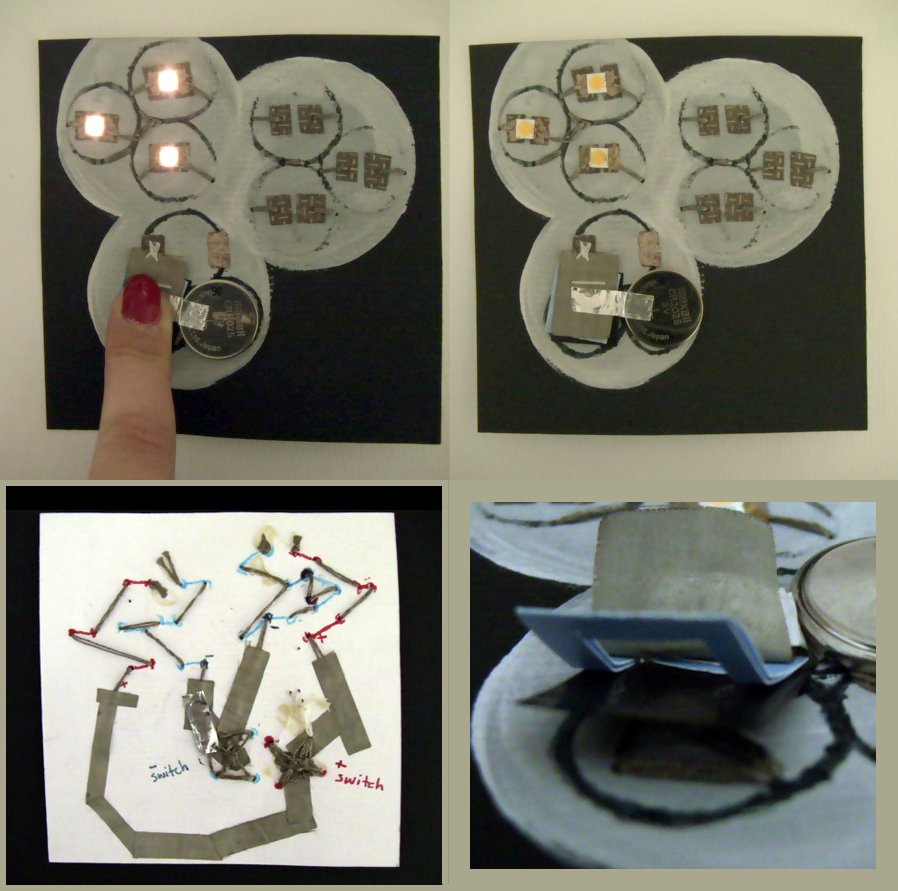
soft switch
Defining 'Entropy'
Entropy can be characterized by the term ‘randomness’ to express the phase duration in which a stable system’s state mutates due to expected or unexpected variables.
Introducing 'Systems Thinking'
Systems Thinking teaches us how the design of a complex information system often needs to include mechanisms to account for “short term” and “long term” (or chronic) disturbances of flow caused by environmental changes, by dealing with the “whole” system rather than its parts. By creating systems able to adapt to environmental changes and thus to learn to sustain themselves in the face of unforeseen shifts, design can plan for more effective and efficient complex information systems. This is depicted primarily in the study of Cybernetics.
Kuniavsky’s "Information Shadows"
Information shadows enable users to access information about their products and experience them in very different ways than could have been imaginable before the Internet. Today, products mean so much more to people and impact their product/customer experiences in new ways. With built-in ubicomp, customers experience products that have a much wider network of associations.