think coffee together: trust in public space (calm tech intervention)
To trust a stranger involves a level of bravery and uncertainty in decision-making, which could be made certain if both individuals have an equal need for safety and an equal desire for maintaining their status as frequent customers.
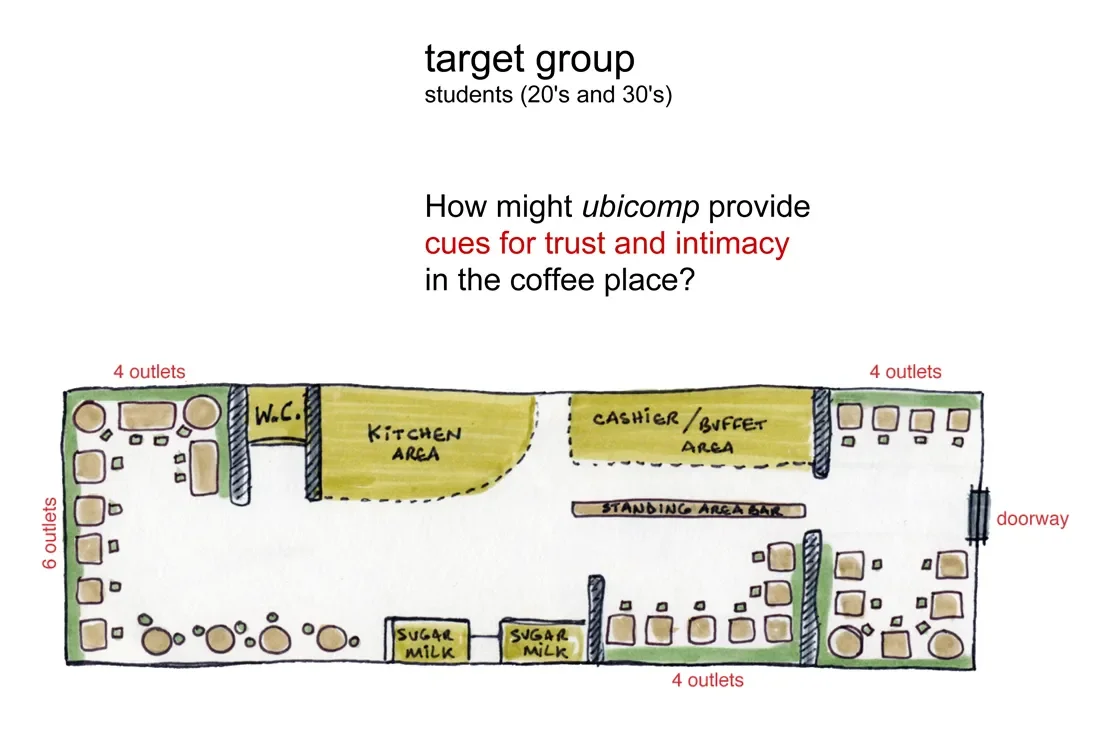
If “equal assets build trust”, and if trust is determined “based on how friendly someone looks” and how much “like me” someone seems, how might ubiquitous computing provide cues for intimacy amongst frequent customers? How might it help build temporary trust in the coffee place?
And, if trusting a stranger with your belongings has two possible outcomes, how might such cues shift or bypass people’s basic assumptions of what a trustworthy person should look like and allow customers to give others the benefit of the doubt and/or to foresee a positive outcome?
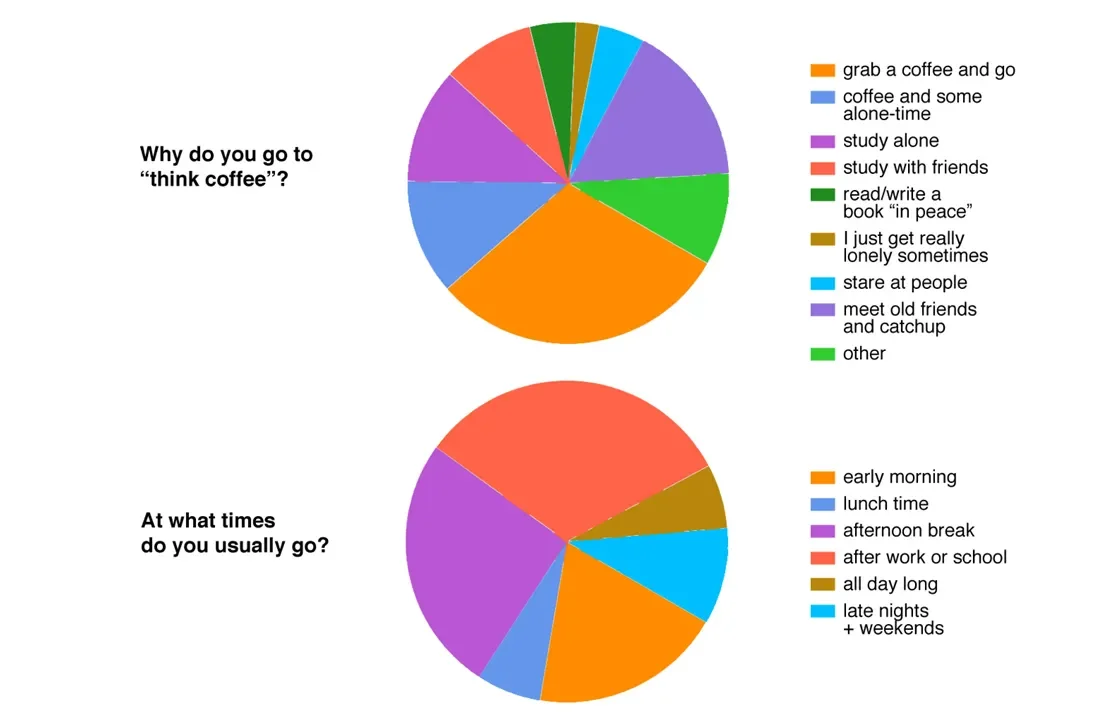
Based on my initial assumptions about customer frequency and the concern with trust and the lack of a sense of community in the context of the coffee place, I sent out a survey to students and found that: students tend to go there to study late nights, after school, and on weekends; students who stay long hours tend to study alone and students who like studying in groups tend to stay shorter time spans.
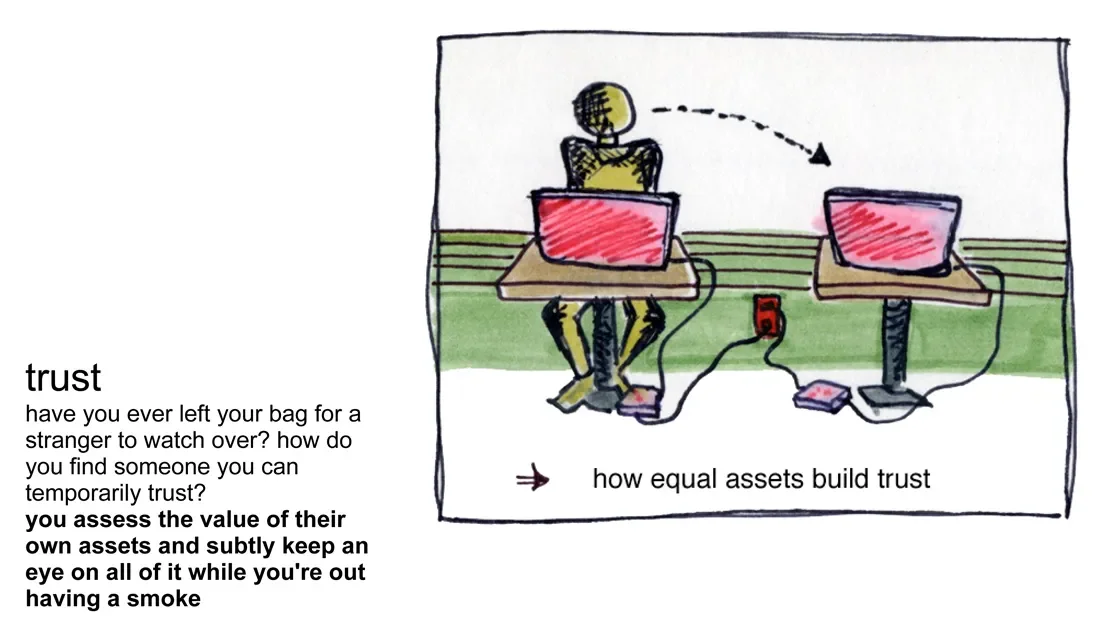
When asked if they had ever sat with a stranger, most people find it difficult to trust anyone, especially people they determined were not trustworthy at first glance. When asked who they would trust with their bag, results included: “you assess the value of their own assets,” “someone who looks friendly,” and “whoever is there that looks like me.”
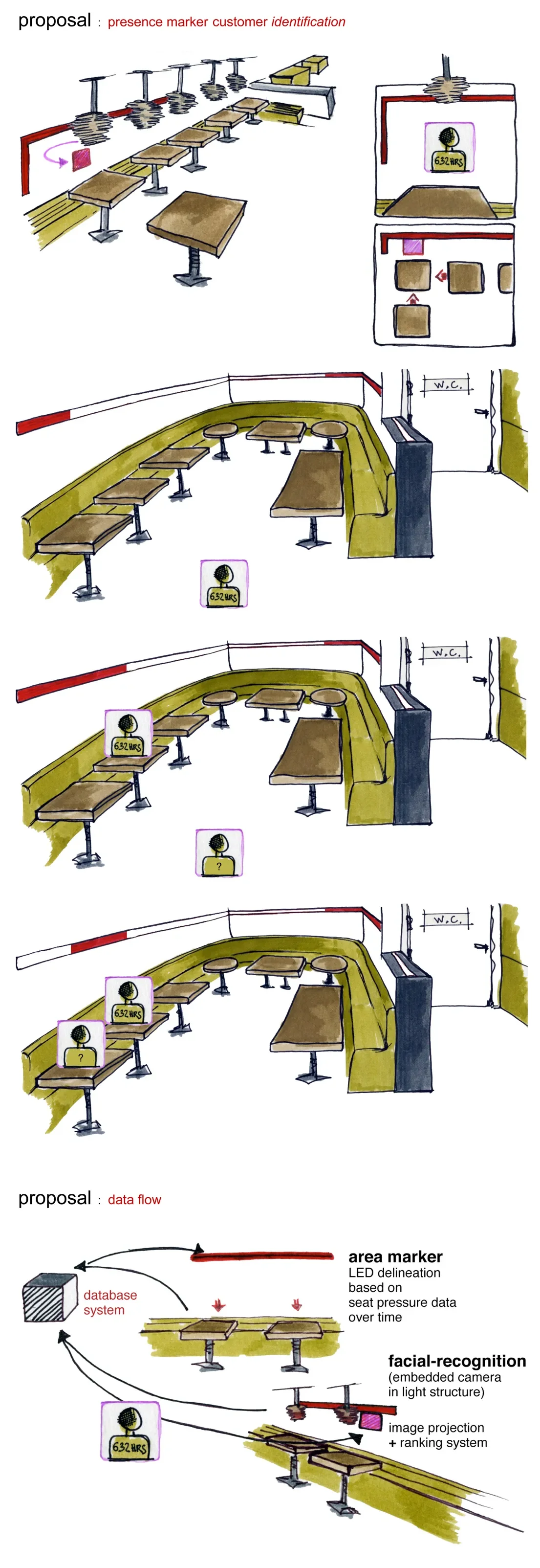
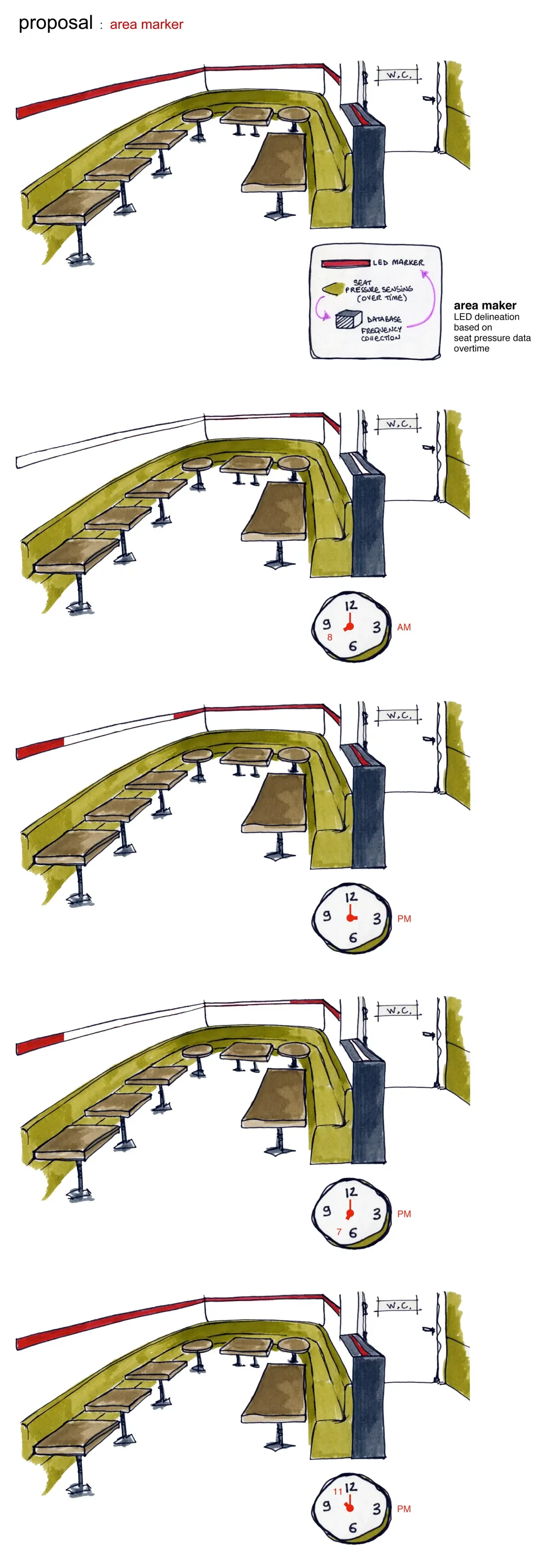
I propose a system that uses pressure sensing and LED markers to influence social behavior in the coffee place by linking individuals to data about frequency usage and to support a sense of community amongst frequent goers by providing a stronger identity to the space.
LED markers delineate specific seating spaces or areas to indicate where frequent customers tend to sit for long hours. This could potentially group individuals together and, in a sense, create a temporary circle of trust. These areas would change dynamically over the course of the day and across different days of the week, based on data collected on usage frequency and duration.
In addition, assuming that data on frequency of use has been recorded over time, an overhead camera would be embedded in the light structure and, using facial recognition, would take an image of the customer and cross-reference it with those in the database. If the customer is recognized, his or her image is updated in the system. If, however, the person is a first-time customer, their image would be added to the database.
Every customer occurrence would be tracked over time, and the number of hours would be displayed or attached to their image as a ranking. As the customer moves away from their seat, the image would be projected onto the wall space as an absence or presence marker. This would delegate the role of safeguarding one’s belongings to individuals within the temporarily delineated space.