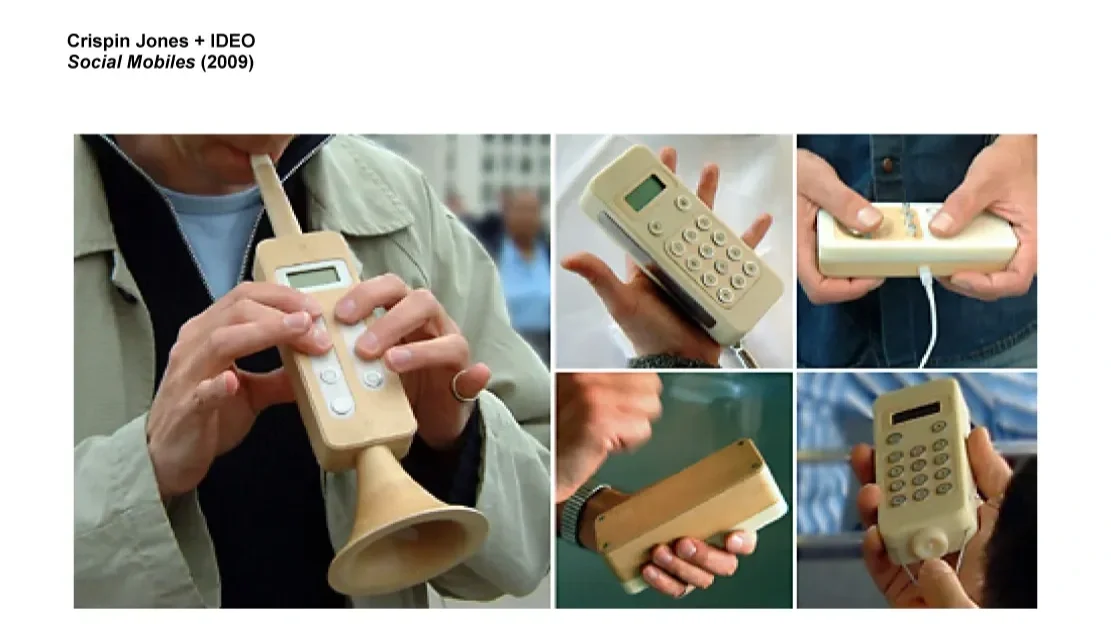
poetic objects (critical design)

How might objects induce altered states of consciousness? What might such objects sound like? How might they behave? And, how might they enact novel social behavioral styles?
The following are three speculative explorations.
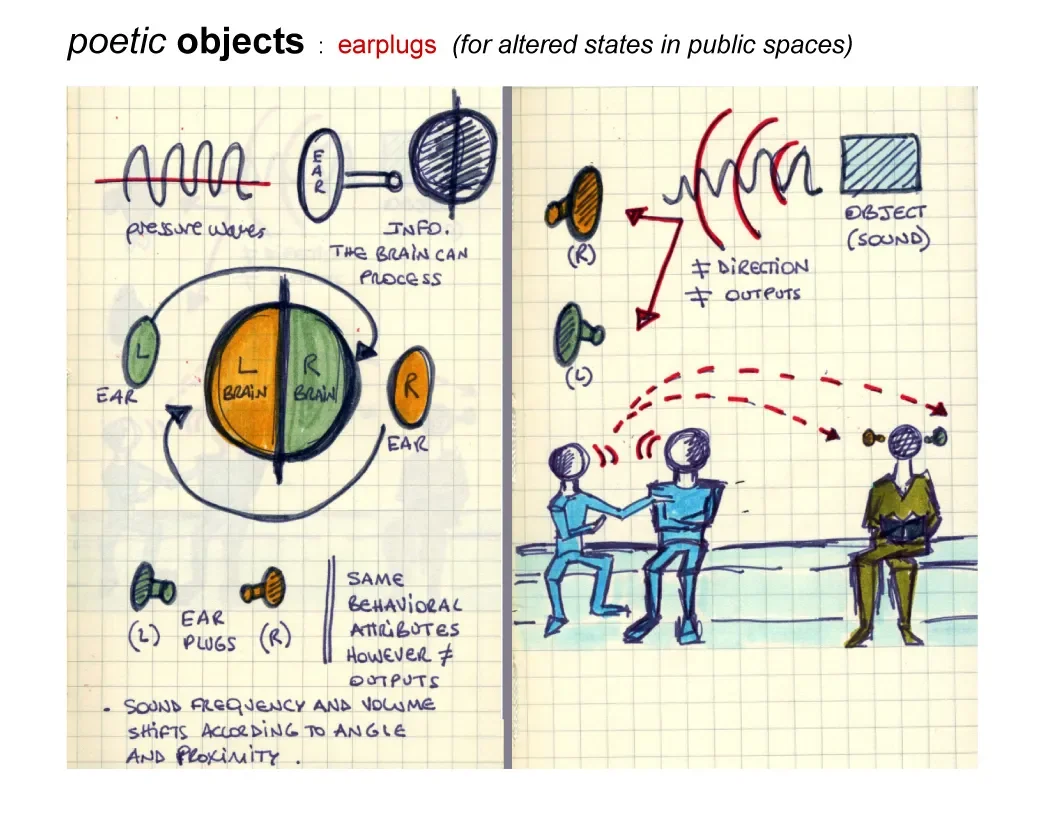
‘earplugs’ transform environmental information into digital sounds (or music) that change frequencies in time according to head angle and change differently for different ears, so that the experience is always context-sensitive and the objects encourage new spatial behavior.
‘earplugs’ provide a new experience of the environment by stripping off the essential information and transforming it into sound that fluctuates in time, which may induce altered states. Since rhythm affects motion, these earplugs could alter how we move through space.
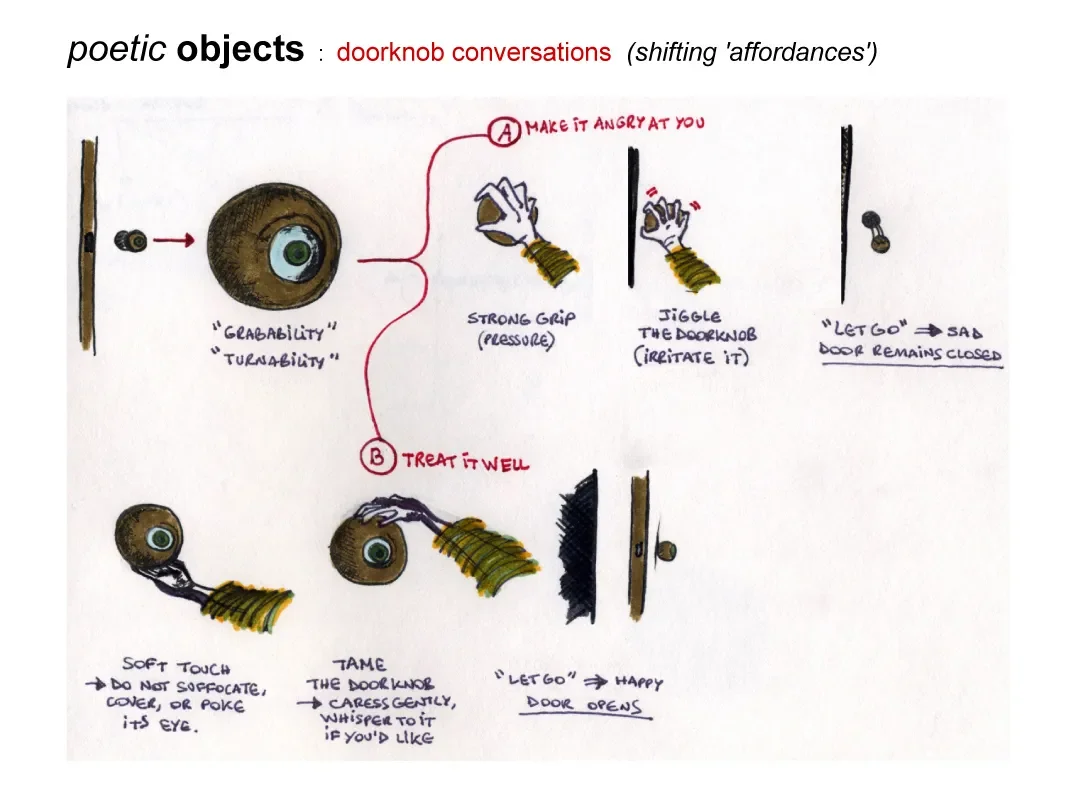
In the context of the home, ‘doorknob conversations’ looks at shifting habitual affordances of grabbing and turning. It is an emotional doorknob that demands affection, this way creating unfamiliar affordances by giving it humane traits, which eventually changes our relationship to the door.
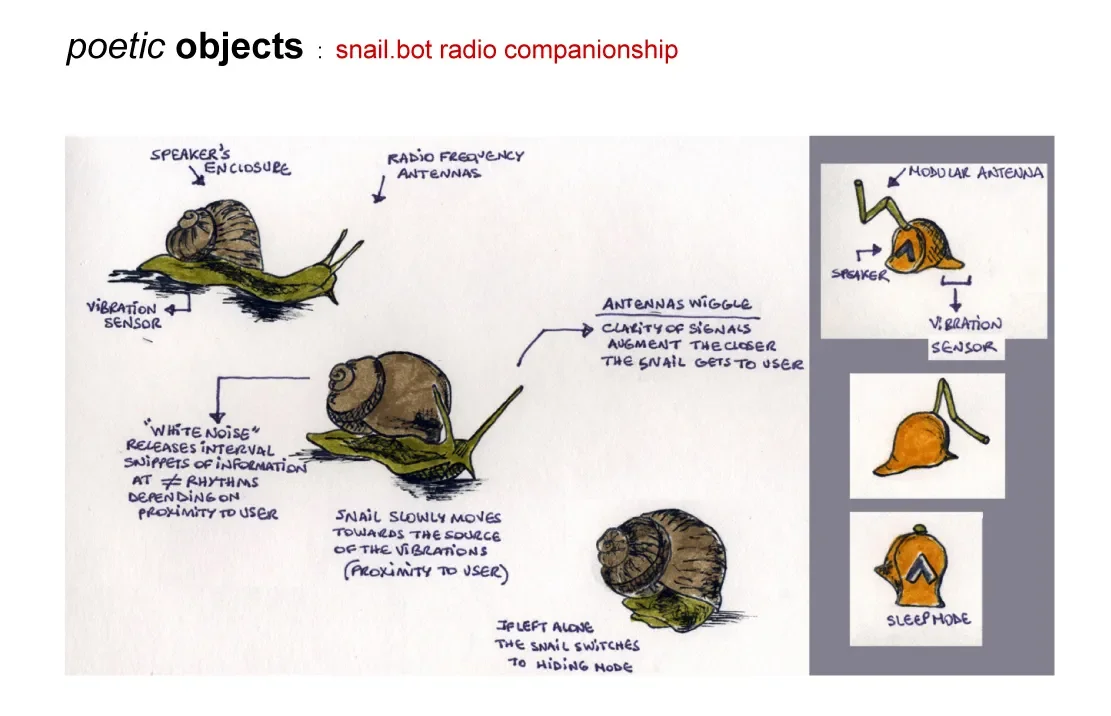
Finally, ‘snail.bot companionship’ uses background noise consisting of drumming sounds that have been known for inducing altered states. The radio is mostly not a radio but a drum player that releases snippets of information when attended to.
Like a snail, it slowly moves in the direction of a person by sensing floor vibrations, and as it moves towards the source, it looks for radio signals. If there is no motion in the room or no light, the radio hibernates or sleeps.
precedents behavioral observations
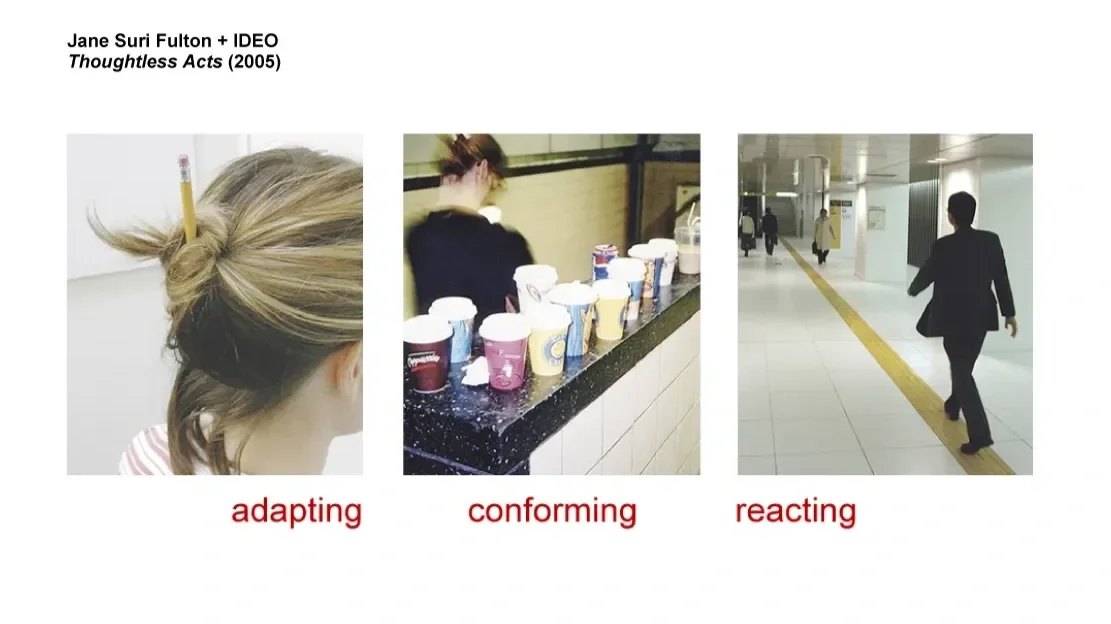
precedents critical design
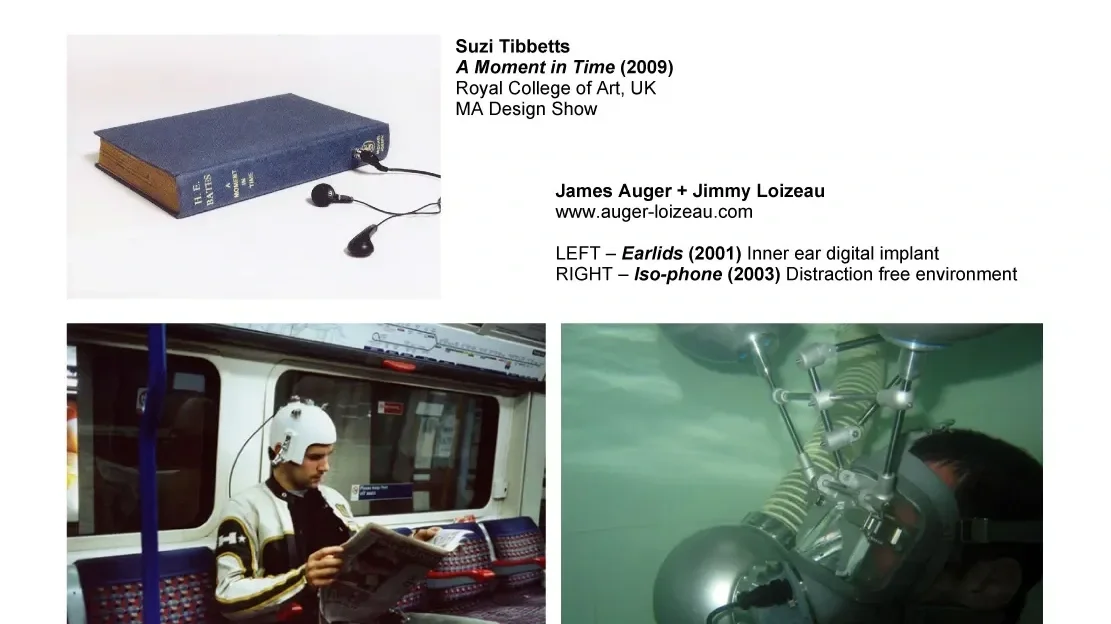
precedents re-designing behavior