
associative space (calm tech intervention)
This proposal looks at creating common ground within familiar spaces by facilitating conversations among individuals with related interests online, within degrees of separation from one another or having degrees of potential connection online.
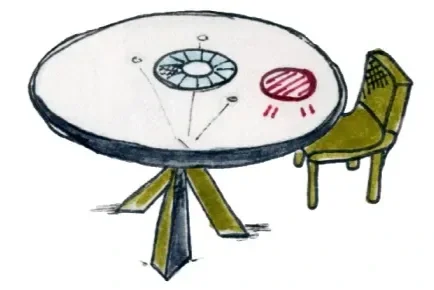
This project, ‘associative space,’ investigates social network behavior online and how “calm technology” can introduce aspects of online interaction into the realm of human-to-human interaction in the context of an office building cafeteria.
The aim is to foster exploratory behavior by employing available information online and making it fit into individuals’ everyday lunching experience in a more salient and meaningful way that could reveal a certain common ground.
How might design interventions affect habitual experiences and social practices or flow? And, how might calm technology foster exploratory behavior in public spaces?
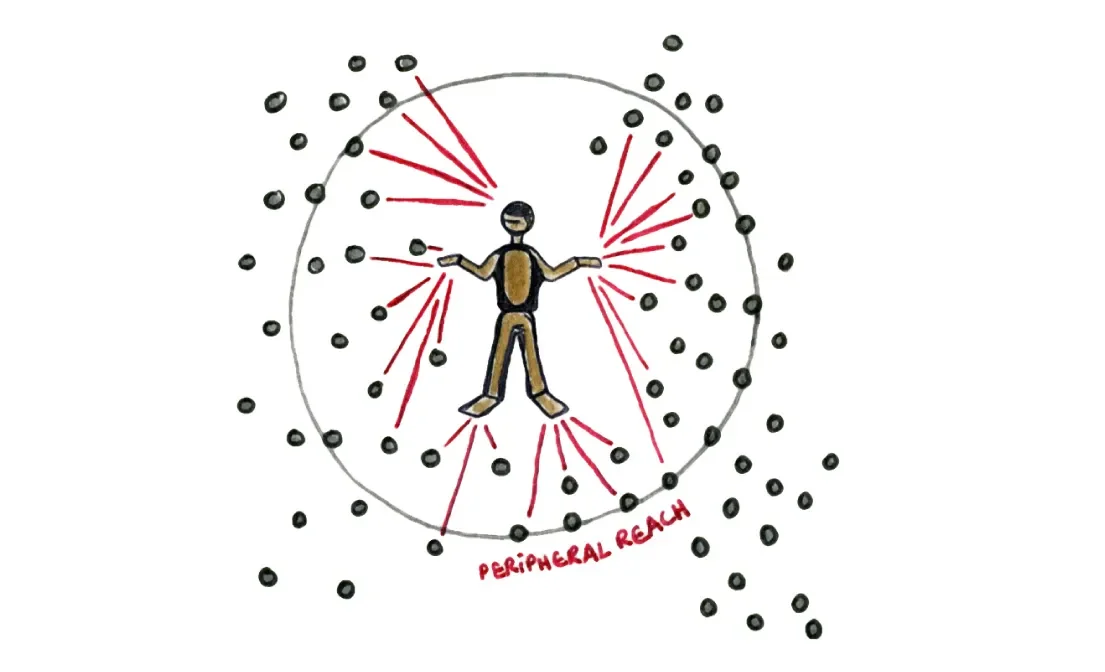
According to Weiser and Brown (1996), peripheral information describe action enabling technologies that stimulate the senses, yet remain on the periphery of our perception and are therefore encalming.
Online non-interactions:
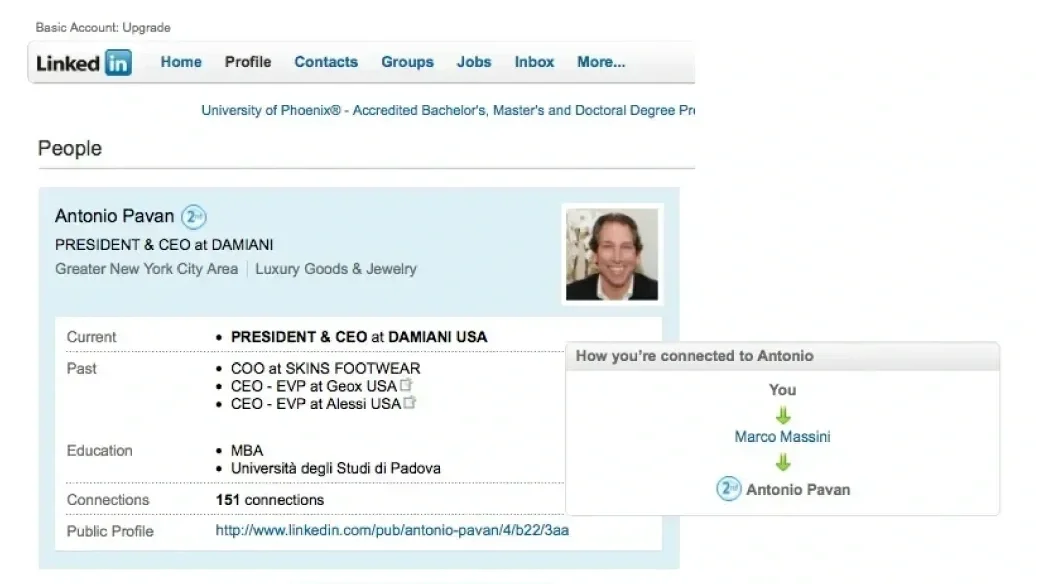
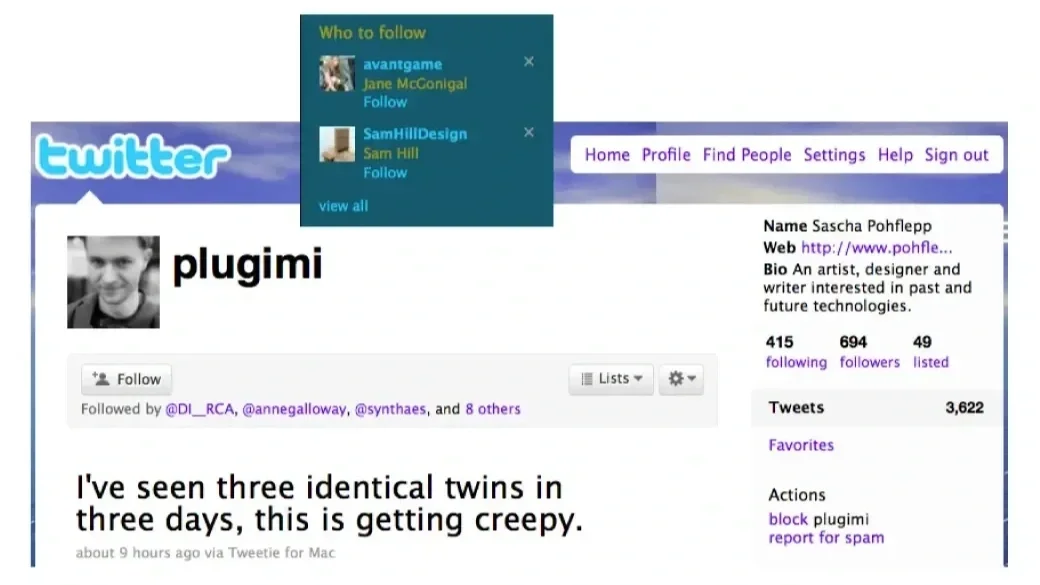
social networks and the people we never get to meet
LinkedIn: degrees of separation; Twitter: related followers and common interests (or fields)
Offline interactions:
situated networks and the people we might get to meet
SOCIAL NETWORKING
SCREEN-BASED
INTERACTION
vs
COMMON GROUND IN PUBLIC SPACES
PHYSICAL
INTERACTION
associative space: a space of dialogue
Assuming that there would be multiple organizations within a single office building with varying professional fields, and in the case of an office building cafeteria, I propose that there would be technologically enhanced communal tables that would support encounter or a cross-organizational dialogue based on online connections and activities. The scenario would go as such:
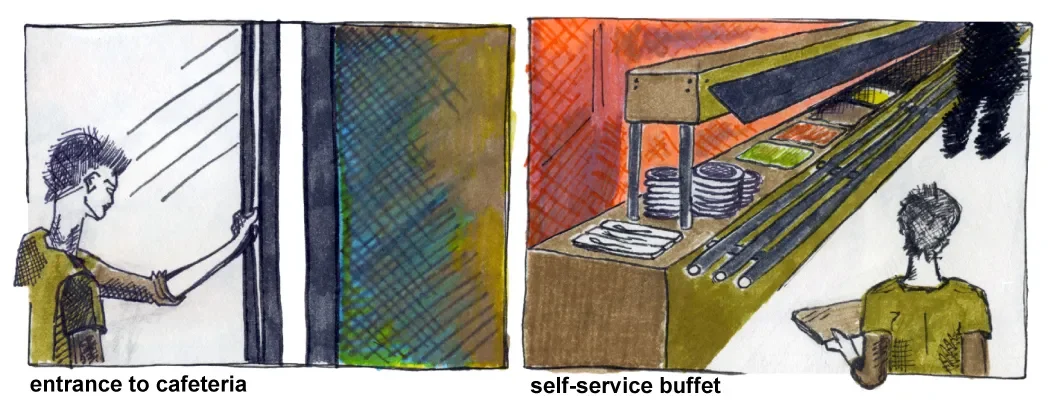
An individual would enter the cafeteria, as always, and gather food on their tray.
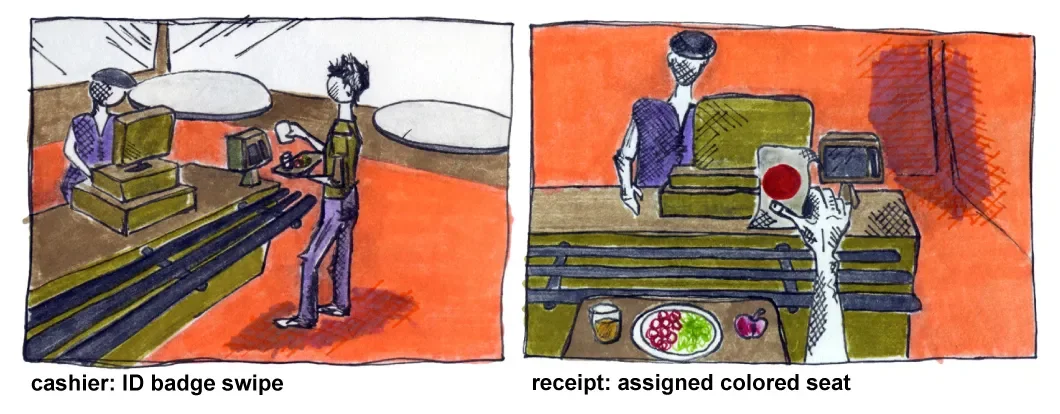
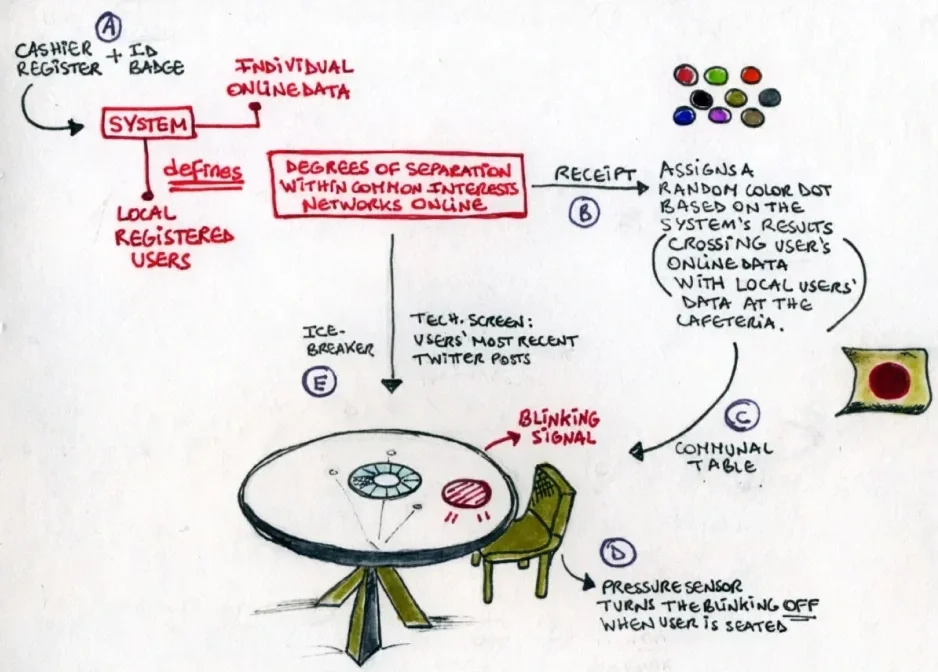
They would then pay by swiping their ID badge at the cashier, at which point the card would be read for individual information online and cross-referenced with data collected about individuals already seated in the cafeteria to identify locally existing associations based on common interests among those individuals. The result will be a colored dot assigned to the individual and shown on their receipt. This colored dot serves as a reference point to guide individuals in locating their seats. The same color would be replicated as a blinking signal on the surface of a table where an available seat happens to be in proximity to like-minded individuals.
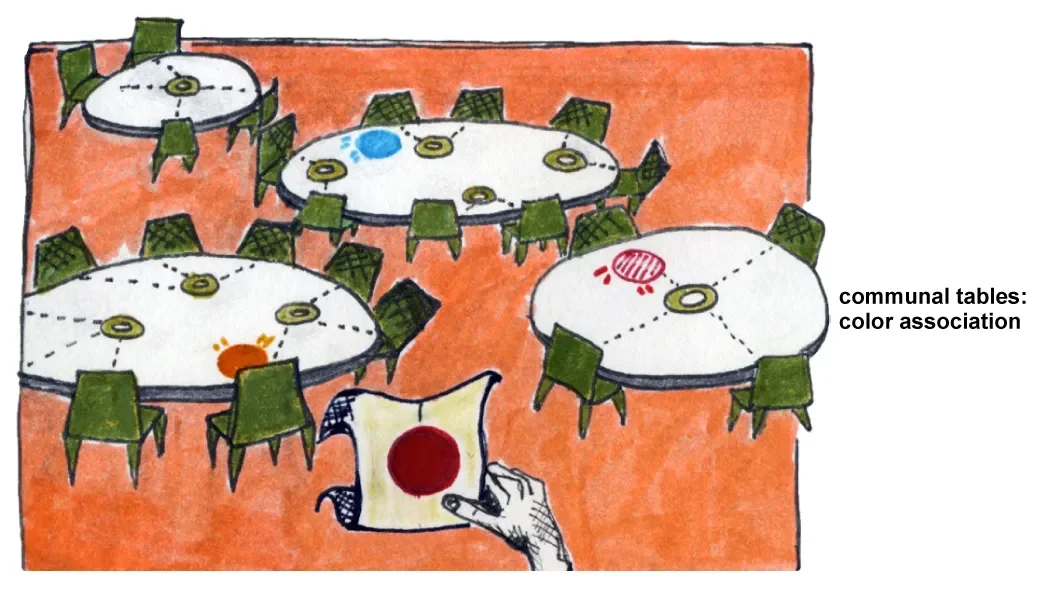
The way the color is chosen is based on a sequence of colors to differentiate the previous person’s color from the following person’s color. This helps diminish confusion about whose seat is which, and different table sizes will afford different scales of interaction –tables of 4, 10, or more seats will offer different intimacy levels. The positioning selection aims to create space for potential interactions that would otherwise be difficult to achieve.
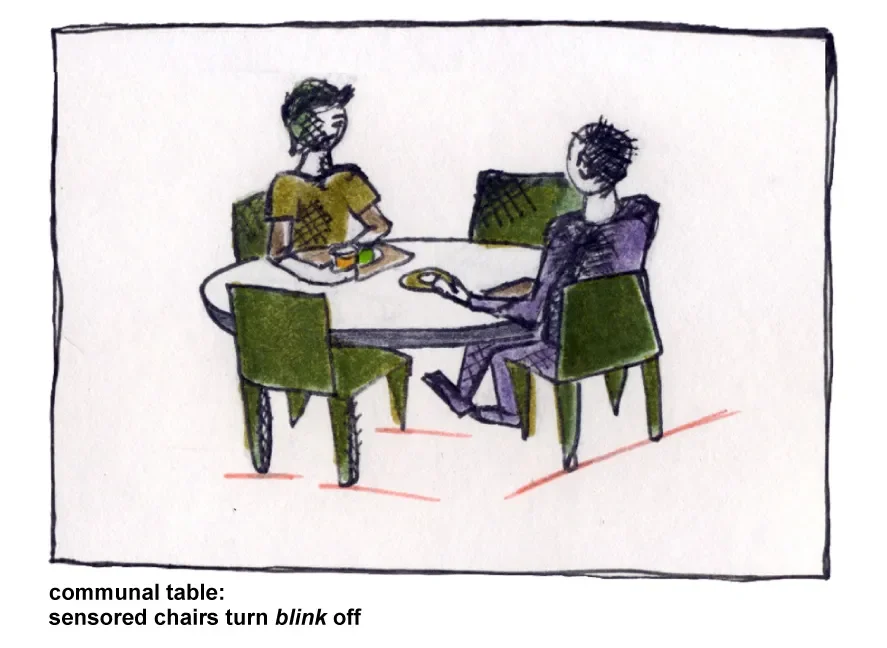
Sensored chairs would deactivate the blinking signal once individuals take their seats.
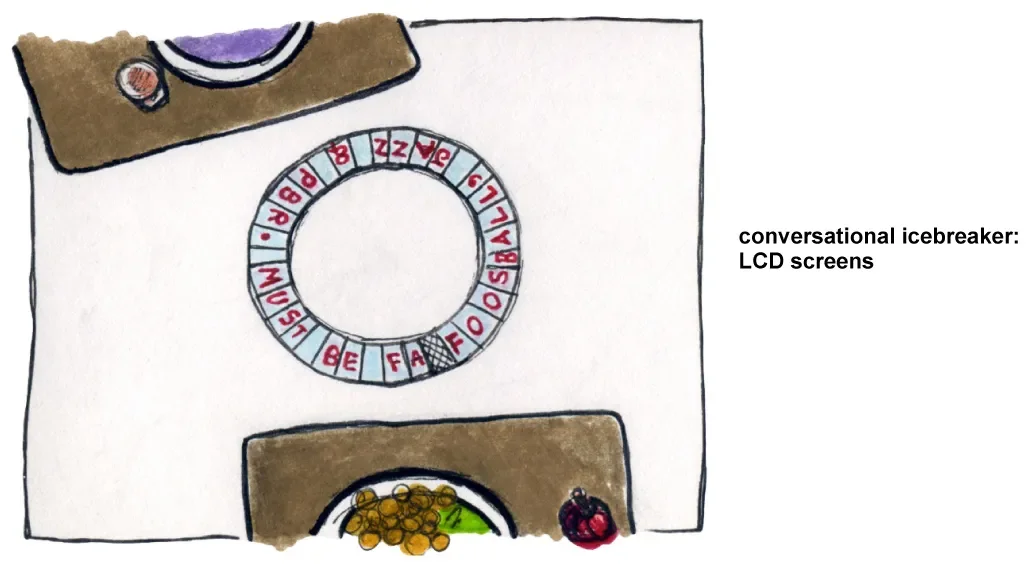
Finally, in order to facilitate dialogue, LCD screens would be integrated into the design of the table to extend the content of first-time conversations and serve as an icebreaker for an otherwise quasi-silent lunching experience. The strings of words will be fed by individuals’ latest Twitter posts as a way to initiate content and enact a dialogue centred on a common or related interest pre-existing between individuals.
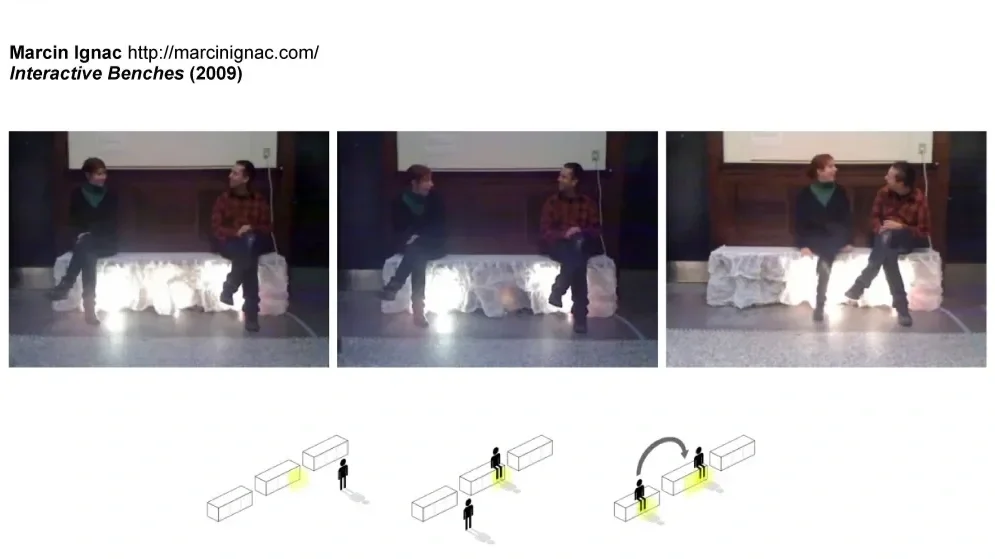
precedents ambient persuaders
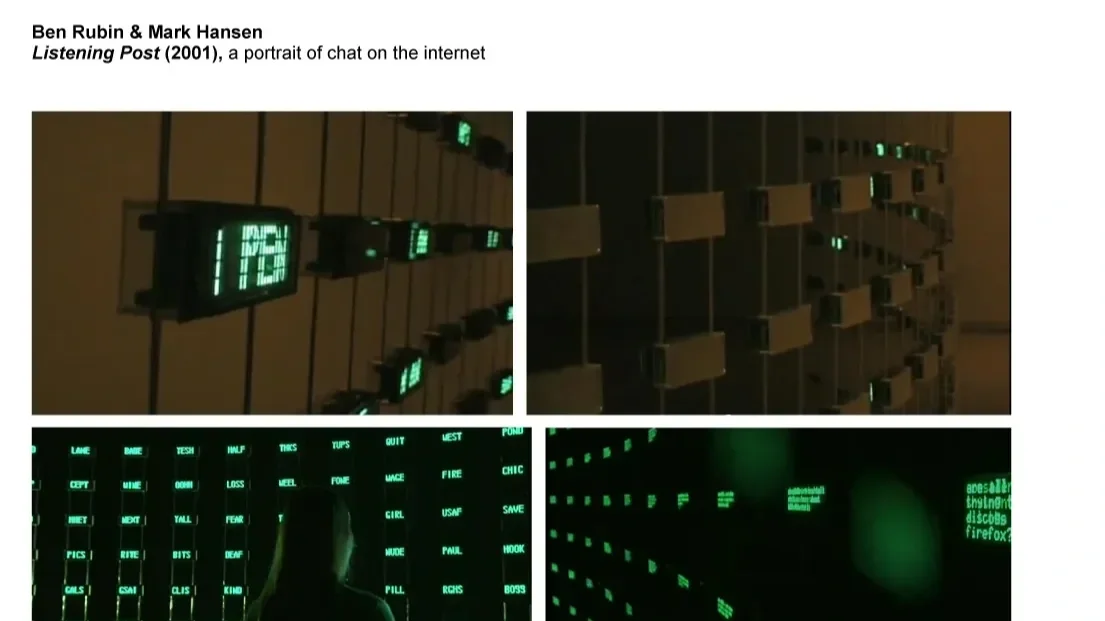
precedents user-generated content
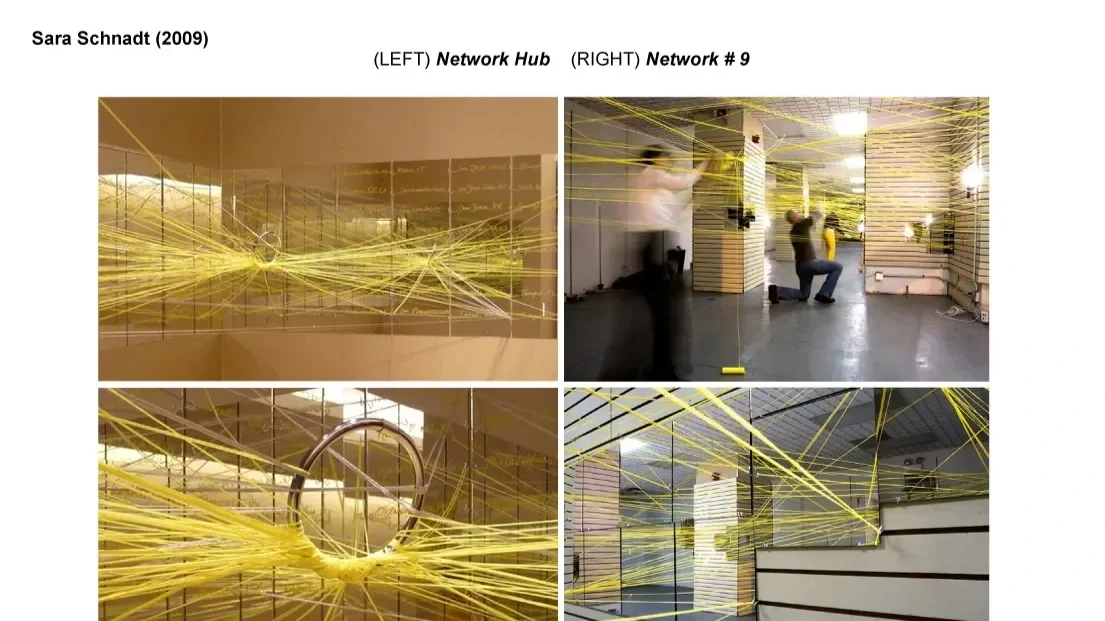
precedents visible invisible